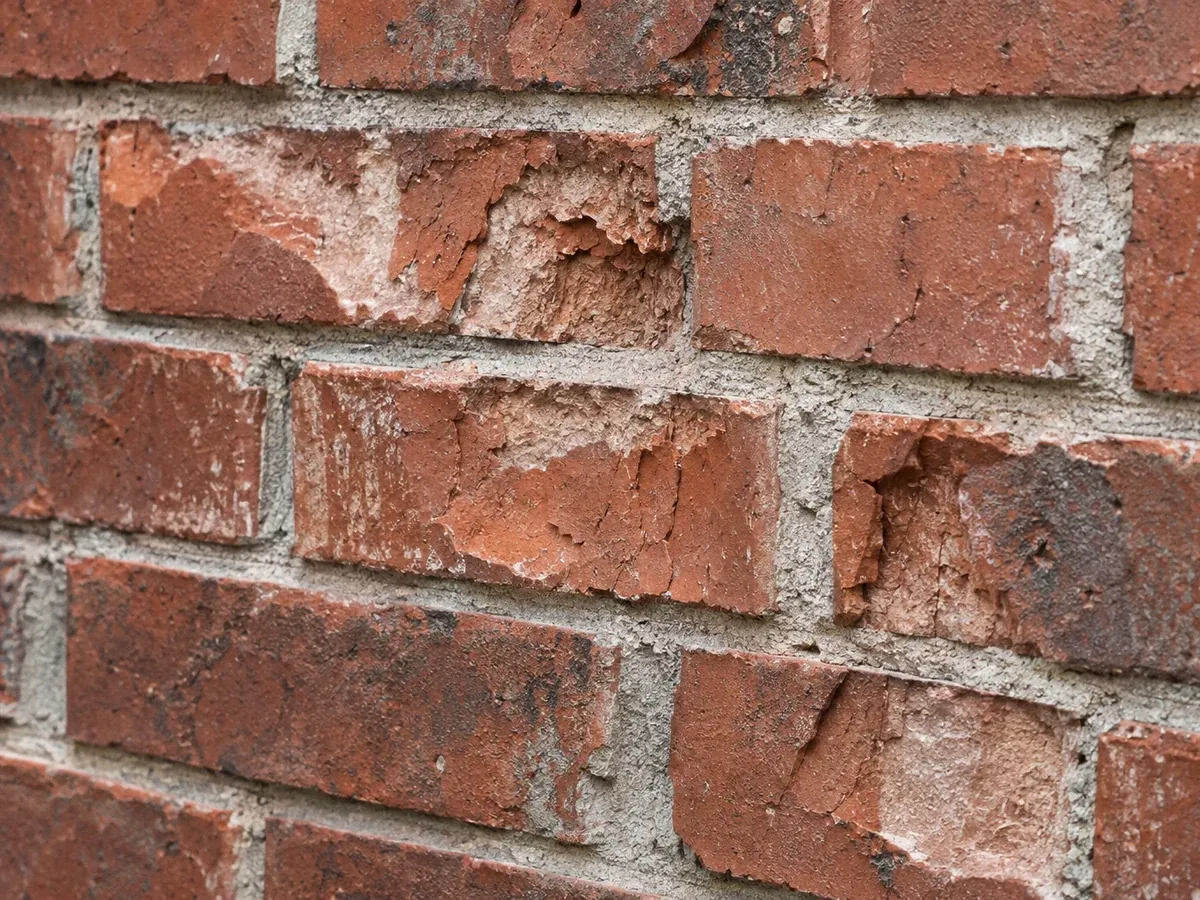
DFW / North Texas Brick • Stone • Mortar
Brick & Masonry Services Across North Texas
New brickwork, stone masonry and careful repairs for homes and small commercial properties—scoped from the material, the detail and the reason the work is needed.
- Fast, no-obligation estimate
- Prompt response and a clear next step
- Quality work with practical pricing
Tell us about the project
Quick startA few details and photos give us the right place to begin. We will reply with a clear next step.
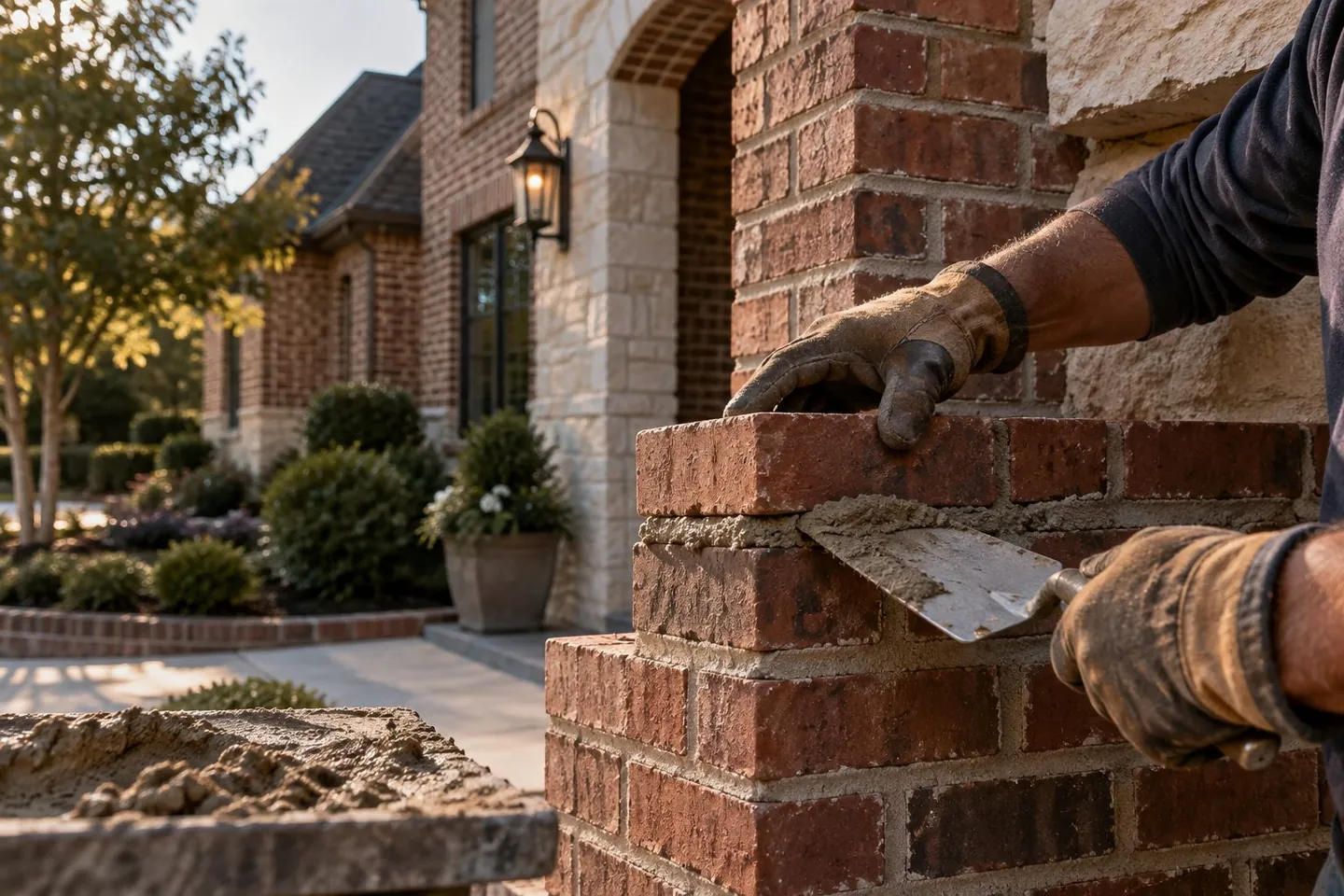
Illustrative masonry craftsmanship image; not presented as a completed company project.
01
Start with the scopeNew work, local repair or a section rebuild
02
Send useful photosWide, mid-range and close detail views
03
Inspect when neededOn-site review where photos cannot settle the question
What are you seeing?
Start with the visible masonry problem.
A crack, loose unit or white deposit is a clue—not a complete diagnosis. Choose the closest condition and we’ll help you identify the sensible next step.
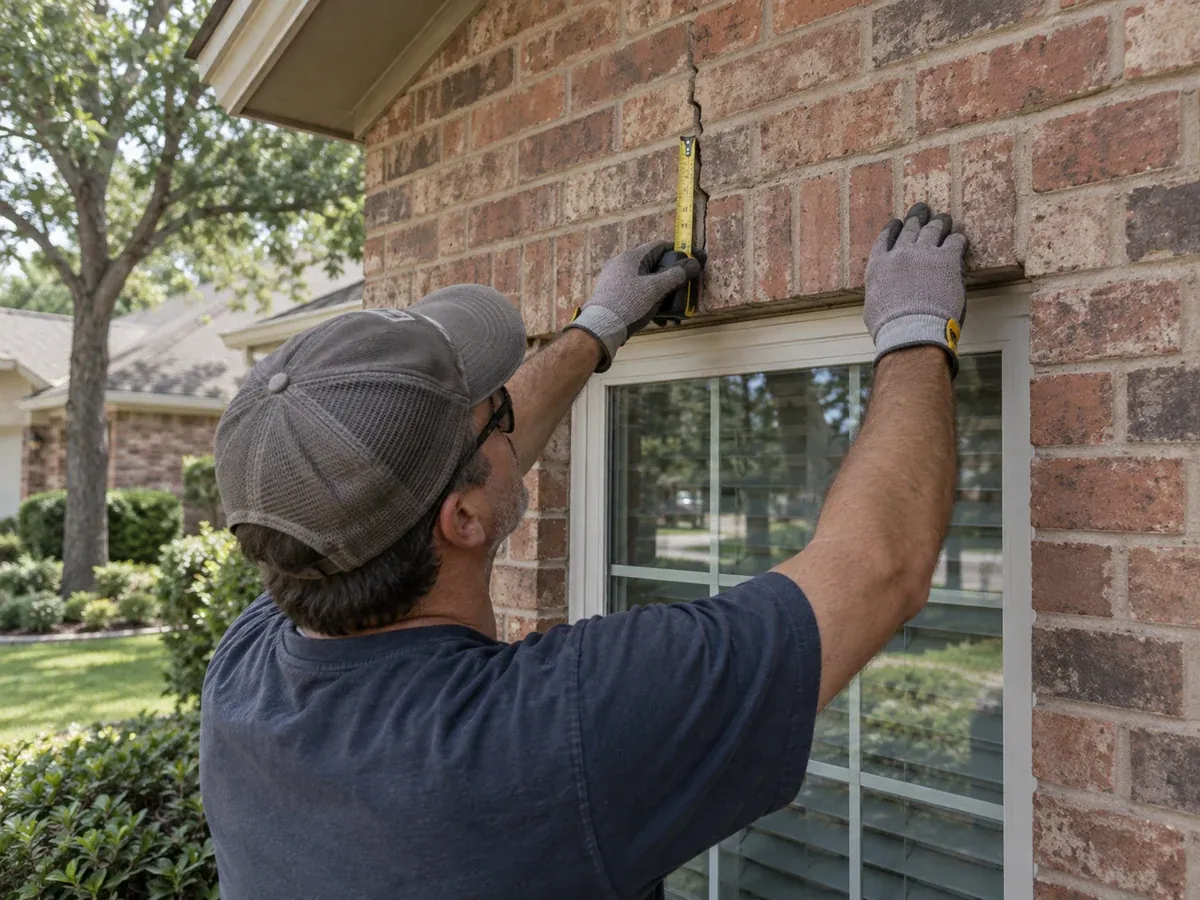

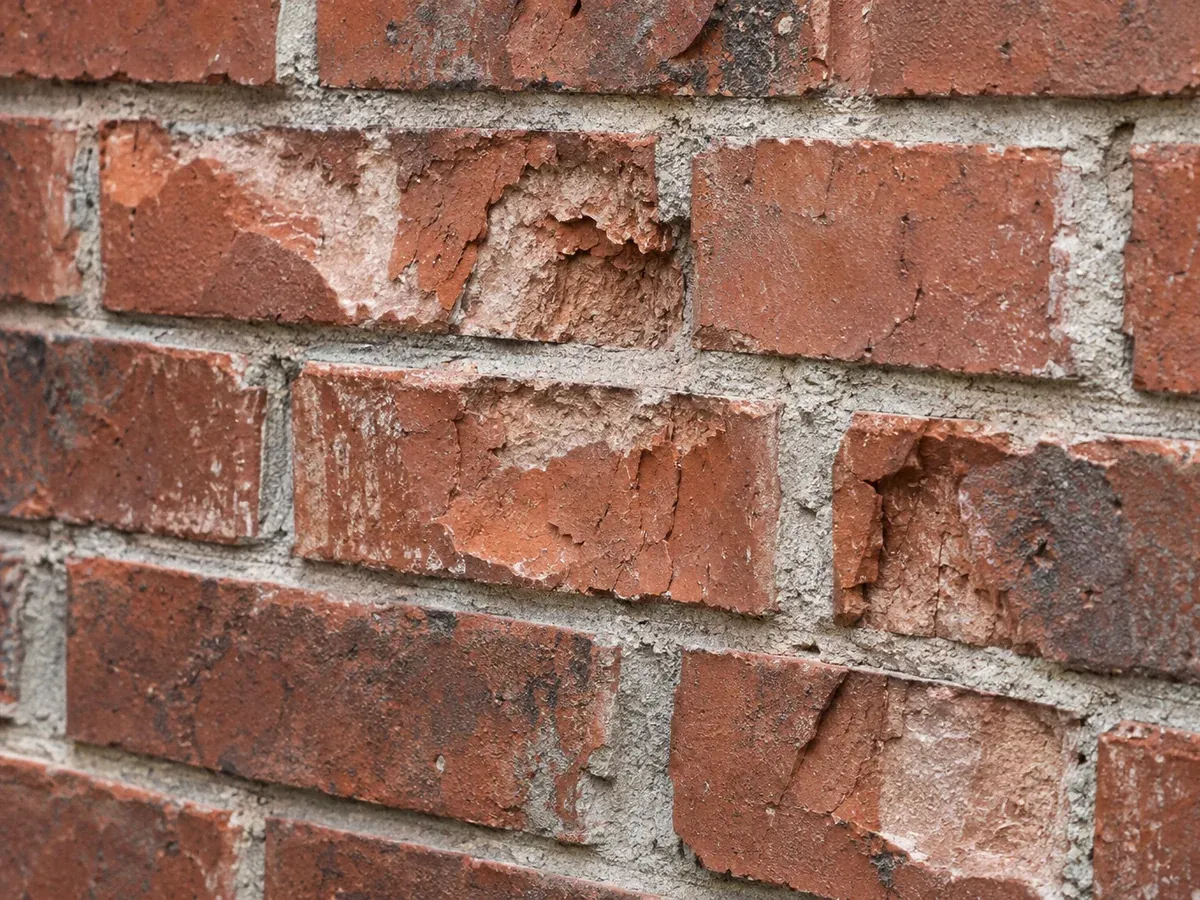
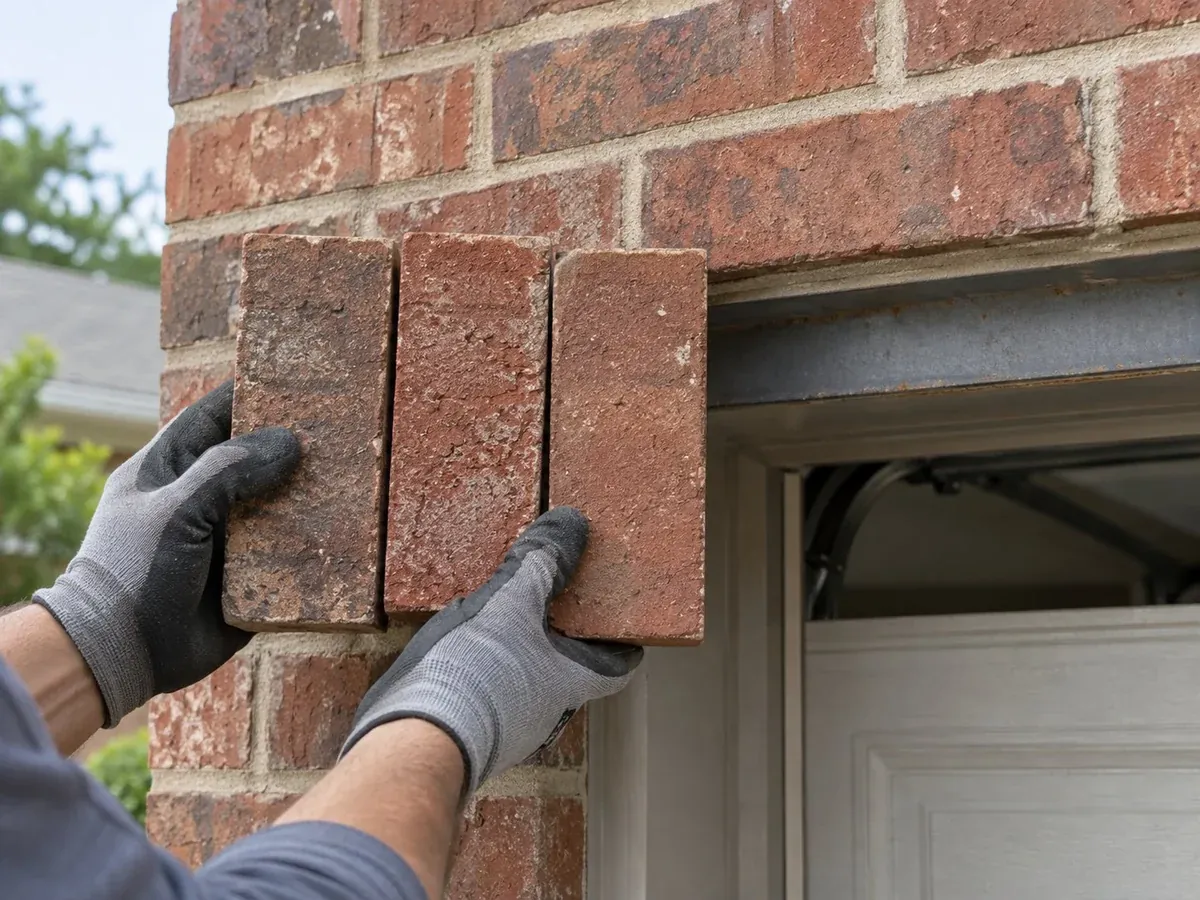
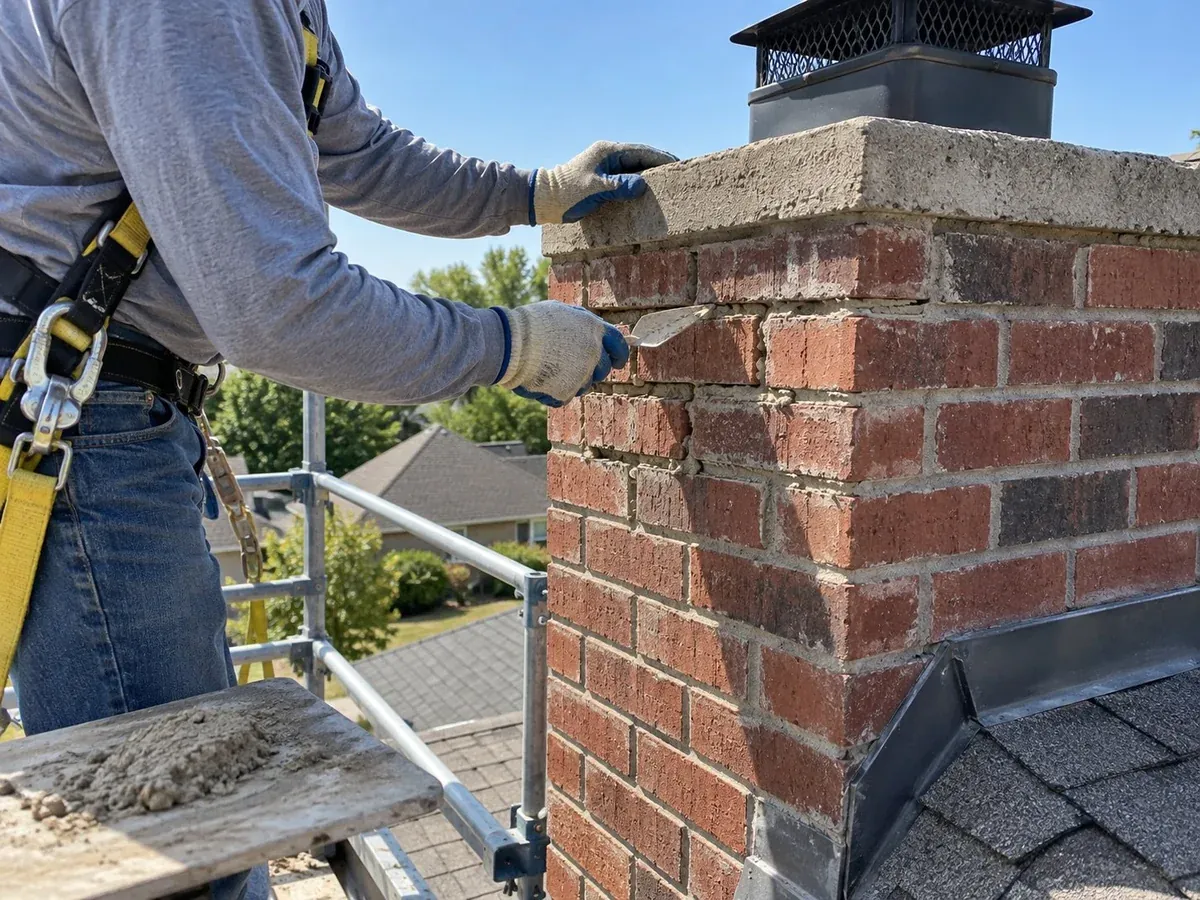
Images illustrate masonry conditions for education and are not presented as completed projects.
Full-scope masonry
One material craft. Two distinct paths.
Tell us whether you are creating something new or dealing with an existing condition. The first decision changes the questions, sequencing and details that matter.
01
New Bricklaying
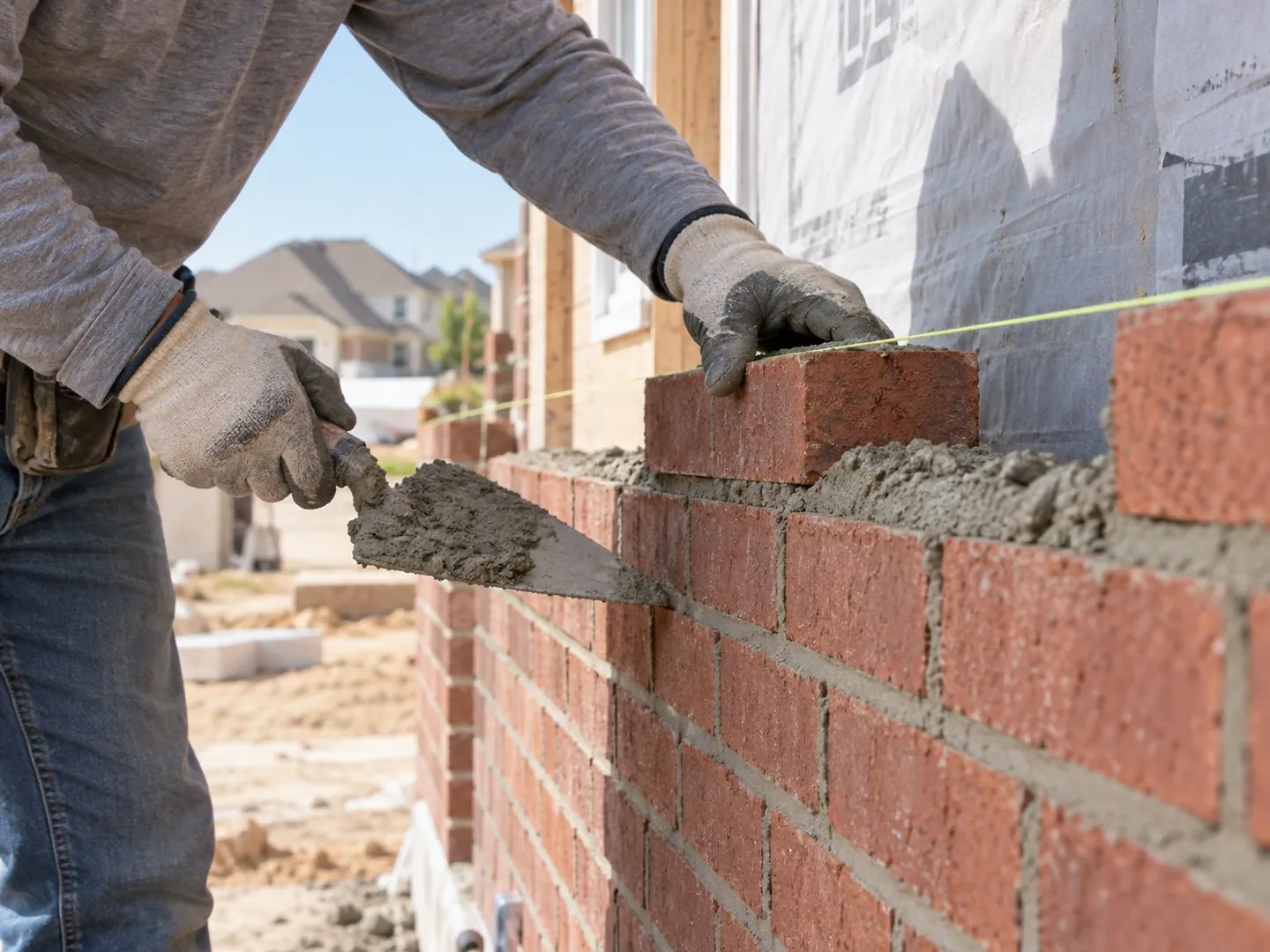
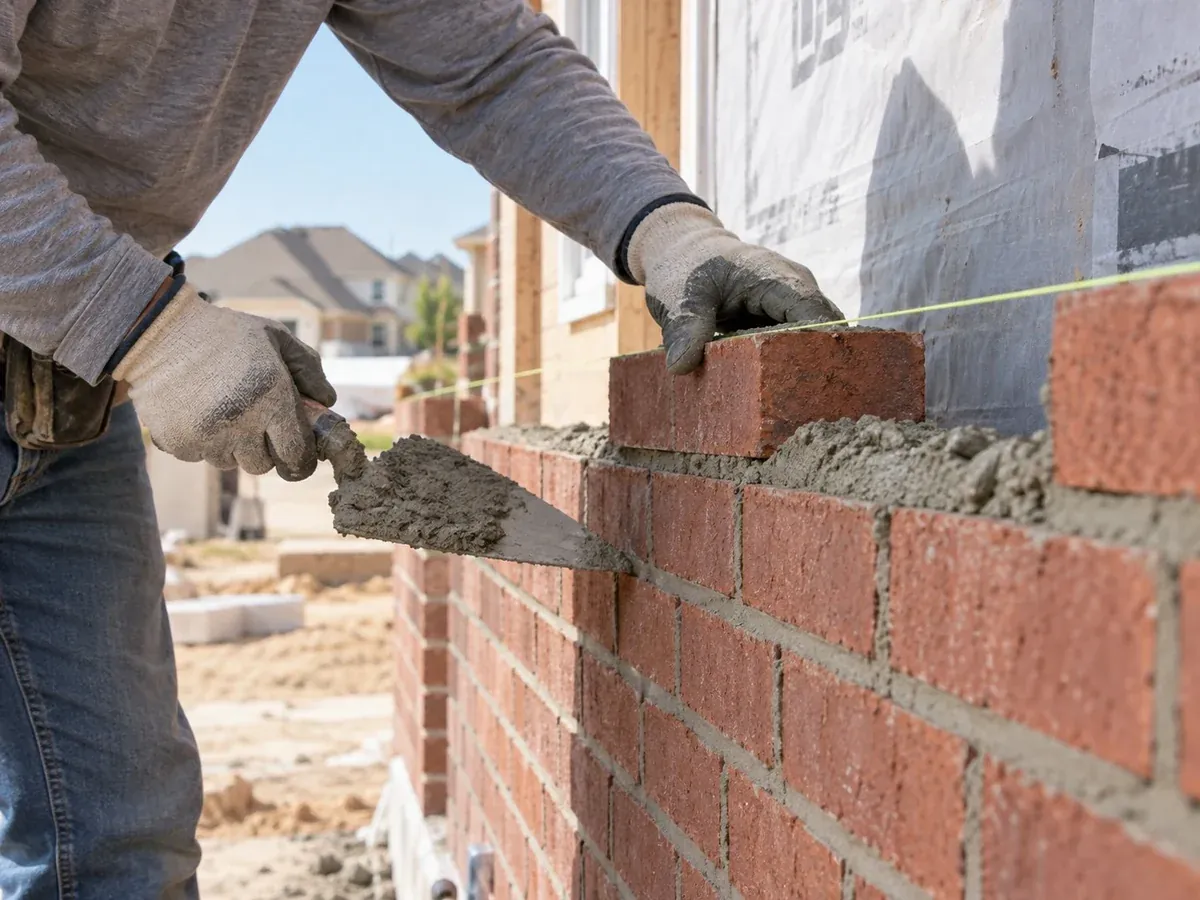
New brickwork planned around bond, openings, drainage details and a physical material sample.
Explore new masonry ↗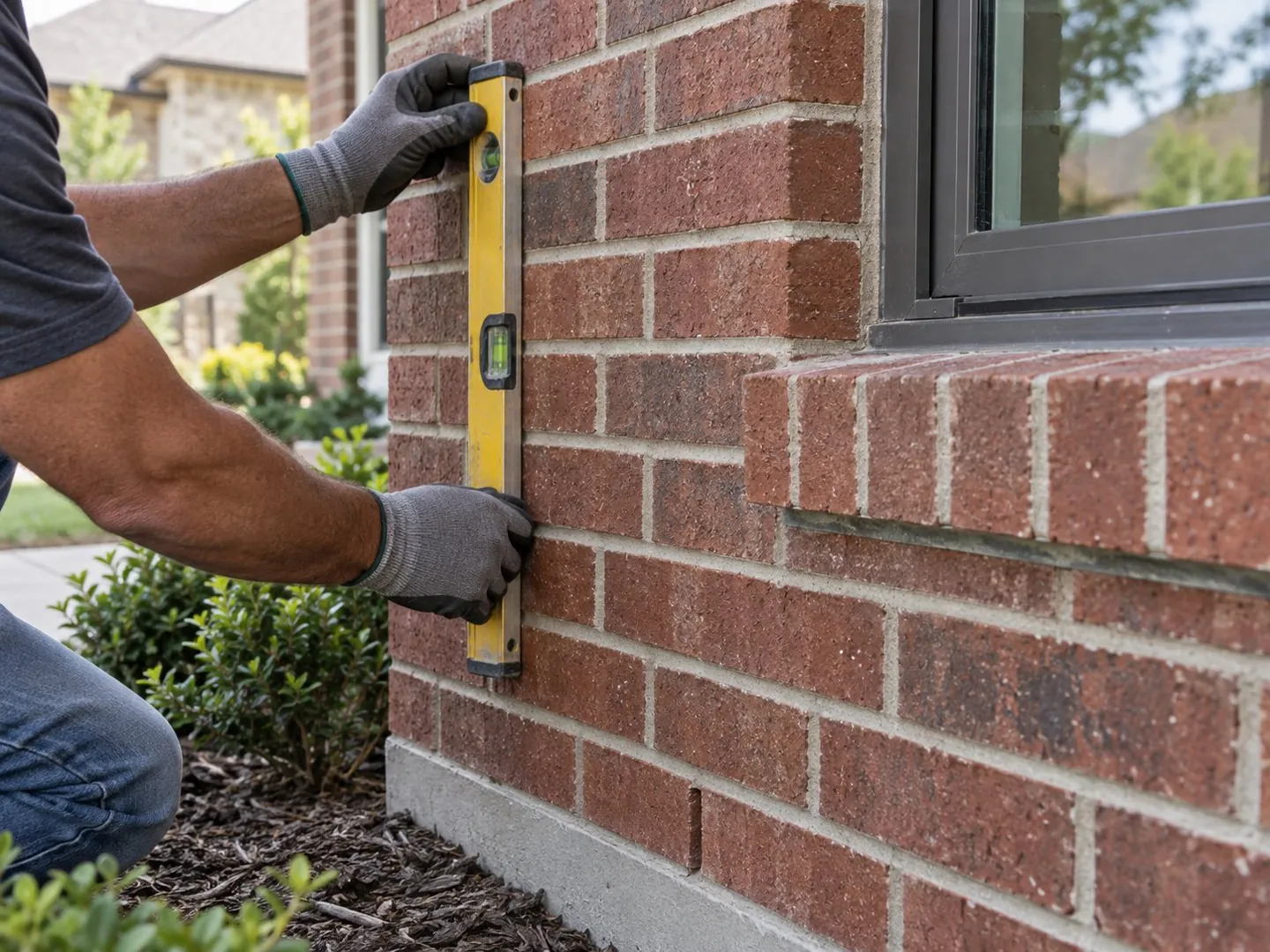
02
Brick Walls & Veneer
Walls, veneer sections and rebuilds with the assembly behind the face considered from the start.
Explore walls and veneer ↗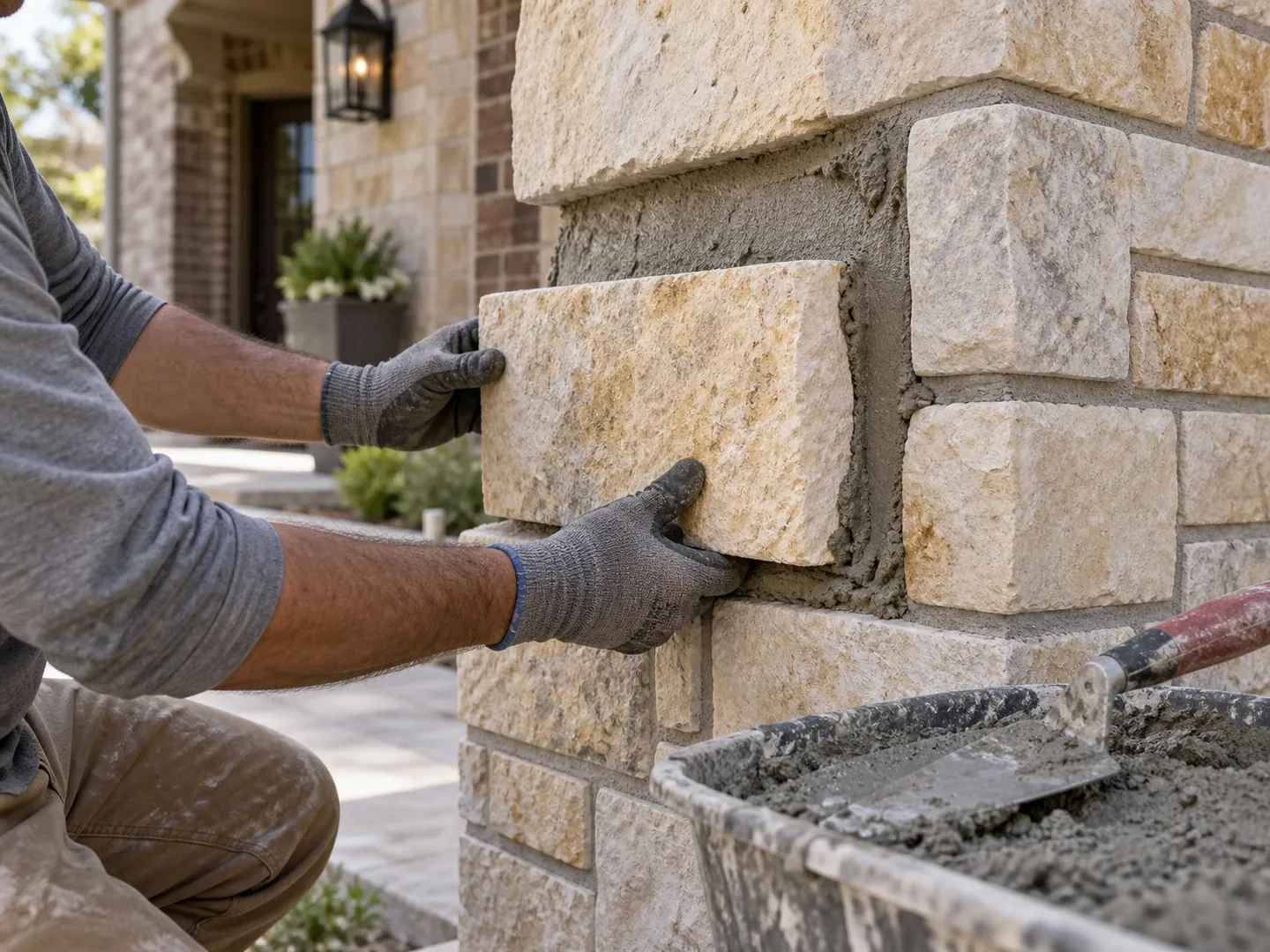
03
Stone Masonry
Natural and manufactured stone features scoped for substrate, joints, caps and water paths.
Explore stone masonry ↗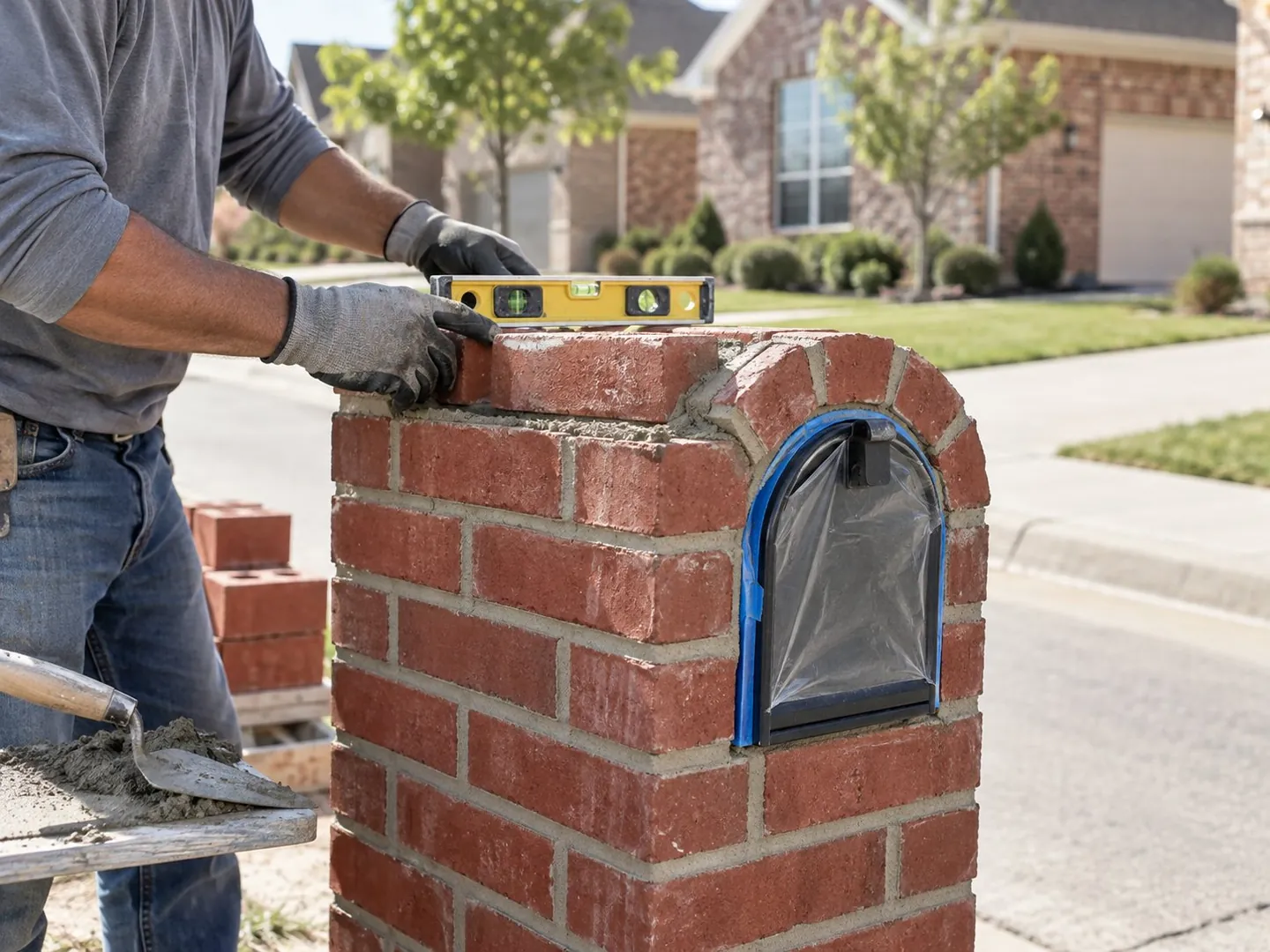
04
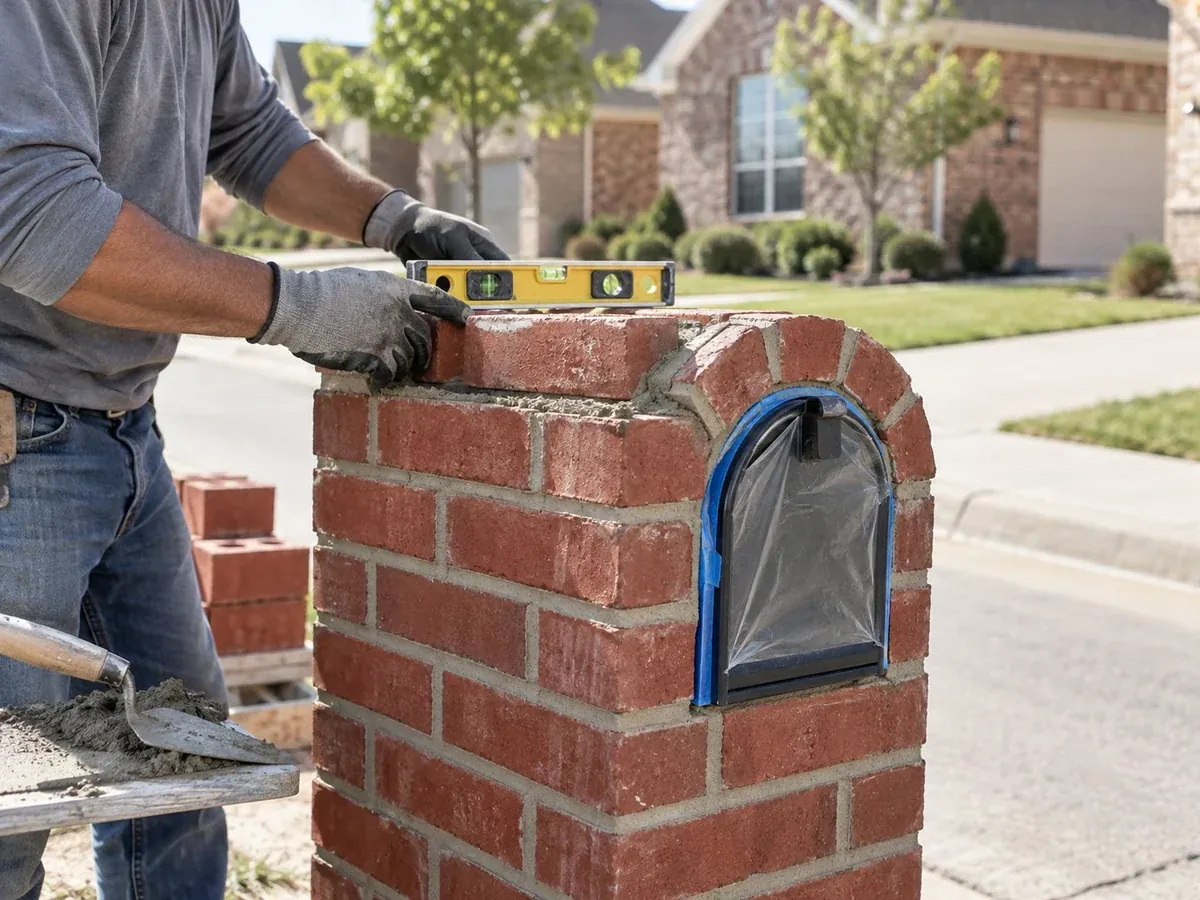
Mailboxes & Features
Mailboxes, fireplaces, steps and custom features planned around use, proportions and site conditions.
Explore brick mailboxes ↗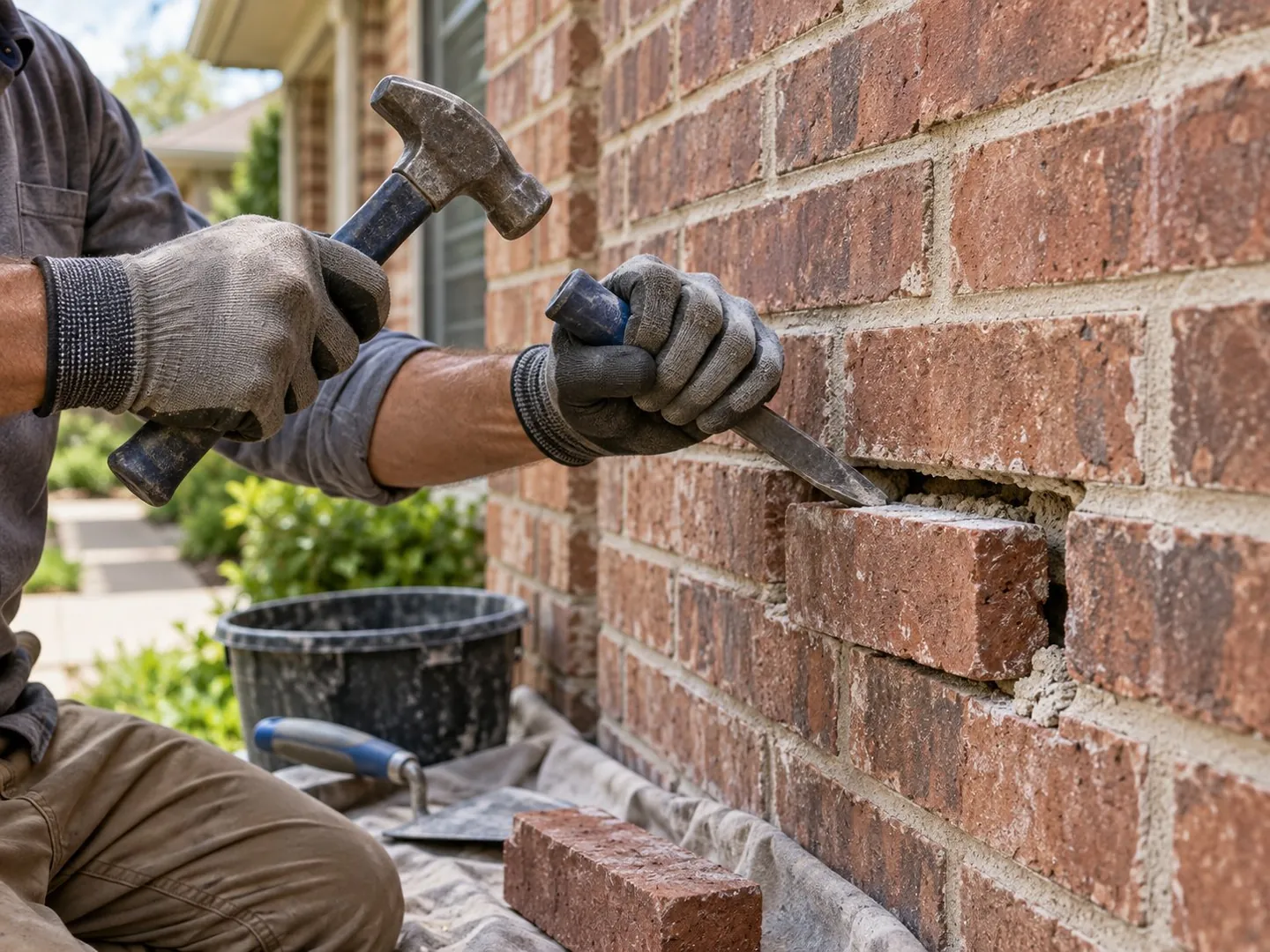
01
Brick & Masonry Repair
Localized brick replacement and section repair after the likely cause is considered.
Explore brick repair ↗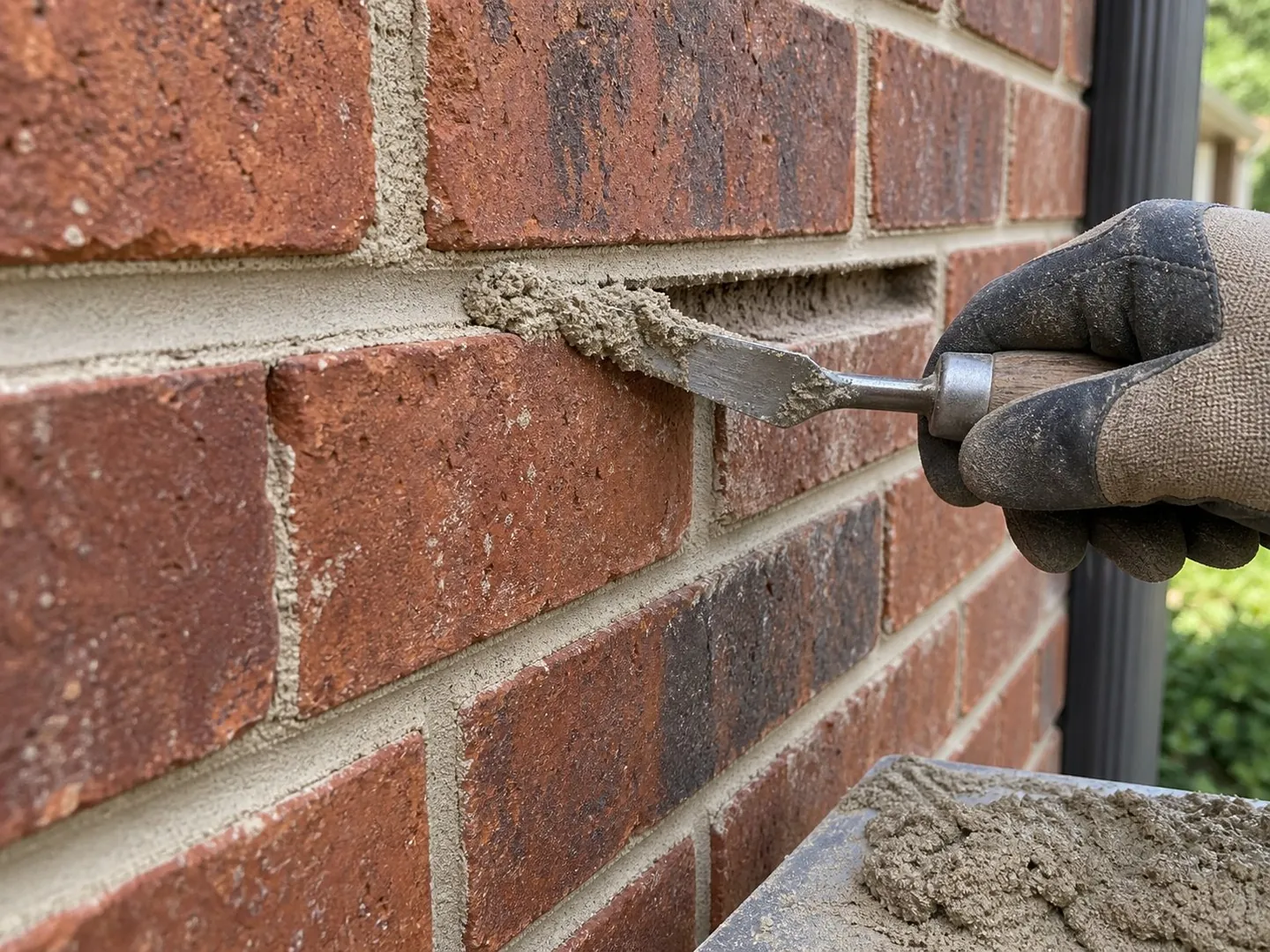
02
Mortar & Repointing
Deteriorated joints renewed with attention to depth, profile and material compatibility.
Explore mortar repair ↗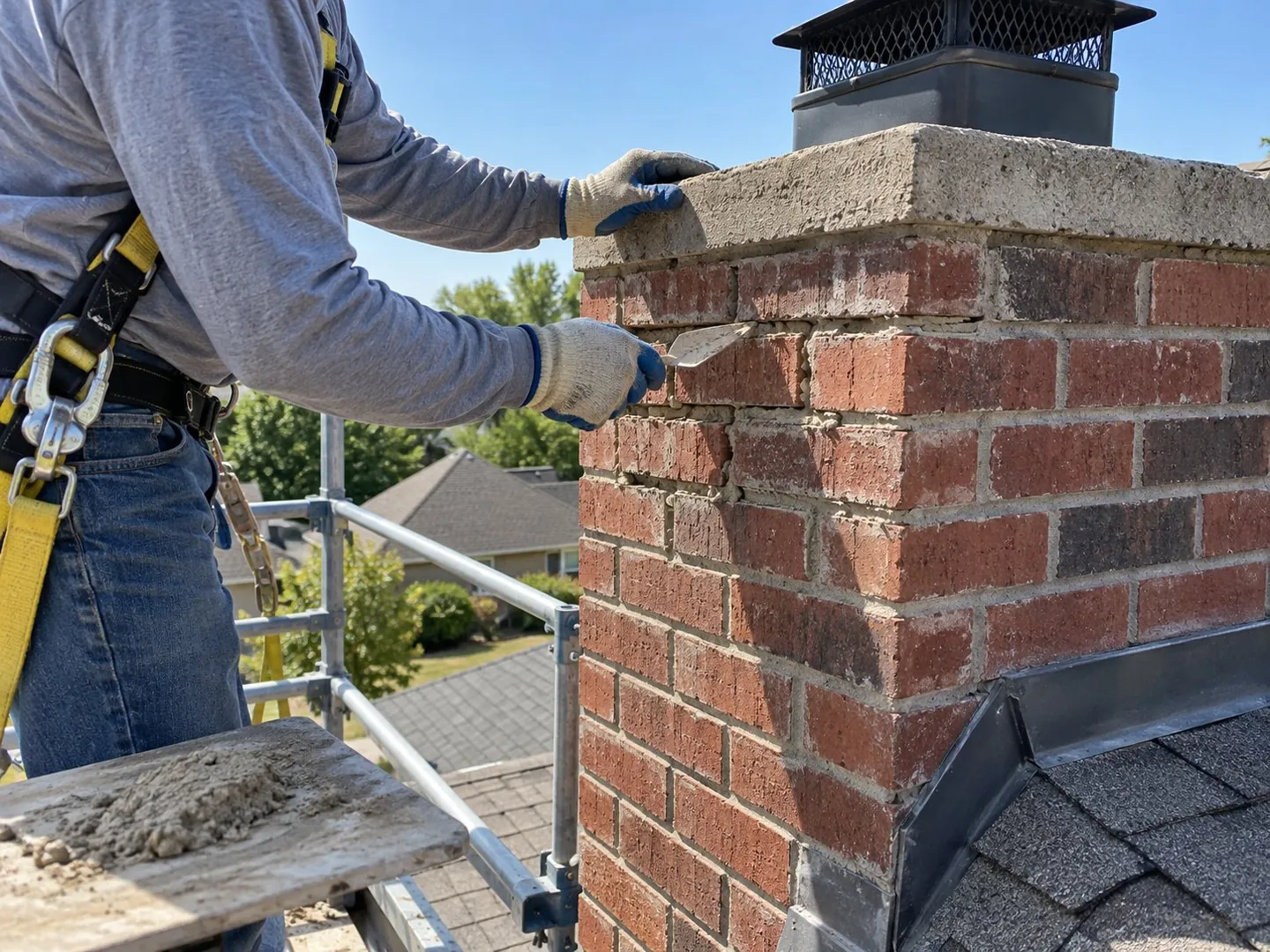
03
Chimneys & Fireplaces
Masonry, crown and joint conditions separated from flashing, flue and fire-safety questions.
Explore chimney masonry ↗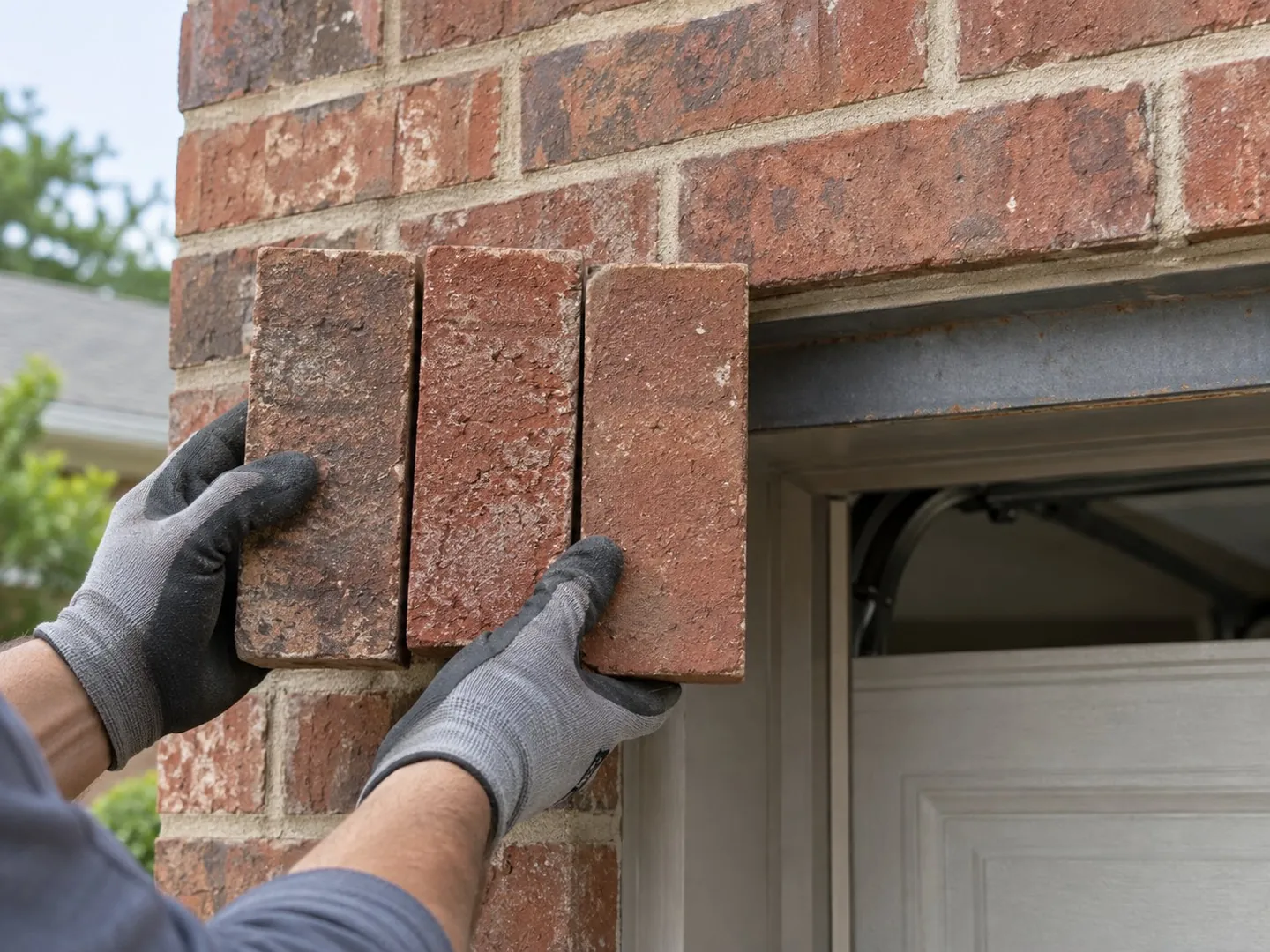
04
Lintels, Arches & Matching
Openings and replacement units reviewed for movement, corrosion clues, load paths and visual match.
Explore openings and arches ↗Photorealistic process illustrations show typical masonry work; they are not claimed as completed company projects.
How assessment works
From first photo to a defined scope.
Photos can start the conversation. An on-site look follows whenever access, movement, moisture or the hidden wall assembly cannot be judged responsibly from a screen.
- 01
Send the basics
City or ZIP, project goal, a short description and useful photos.
- 02
Talk through it
Clarify what you see, what you want and how the area can be accessed.
- 03
Inspect if needed
Review dimensions, material, detailing and conditions that photos cannot settle.
- 04
Define the scope
Separate repair, rebuild and related specialist needs before work is planned.
Brick crack decision panel
A crack is a symptom. The next step depends on the pattern and change.
Look at direction, width, displacement, location near openings and whether the condition is changing. A surface fill does not correct ongoing movement.
Send wide and close photos ↗Cosmetic masonry issue
Stable hairline joint wear or an isolated surface blemish may begin with documentation and monitoring.
Repairable masonry failure
Loose units, eroded joints, local spalling or a stable damaged section deserve a masonry inspection and defined repair.
Possible movement or safety concern
Bulging, displacement, rapid change, falling material or wider multi-system symptoms may require an engineer or another specialist.
Educational visual
The brick is only the visible layer.
A brick veneer wall manages load, movement and water through an assembly. Repair choices should respect the air space, ties, water-resistive layer, flashing, weeps and support at openings.
- Keep drainage paths and weeps open.
- Match mortar to the masonry—not just the color.
- Trace water before applying a coating or sealant.
Brick veneer wall anatomyRealistic cutaway + plain-English key
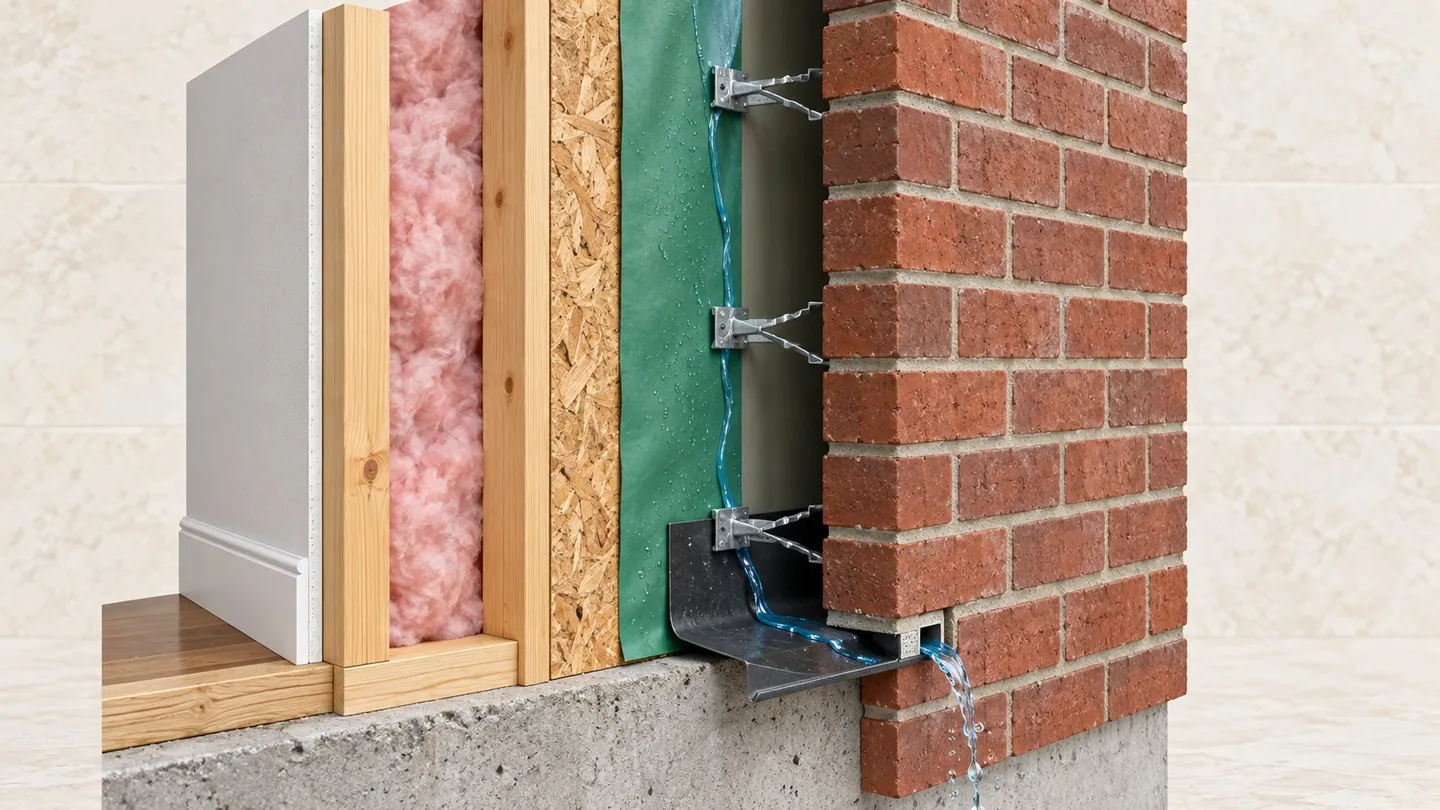
- 1Stud wall & insulationThe building structure sits behind the exterior masonry.
- 2Sheathing & WRBThe water-resistive barrier is the protected drainage plane.
- 3Clear air spaceA cavity separates brick from the backing and gives water a path down.
- 4Wall tiesCorrosion-resistant ties connect veneer to the structure while allowing a cavity.
- 5Flashing & weep openingFlashing catches water and the open weep route lets it exit outside.
Why masonry work fails
Good-looking patches can still miss the cause.
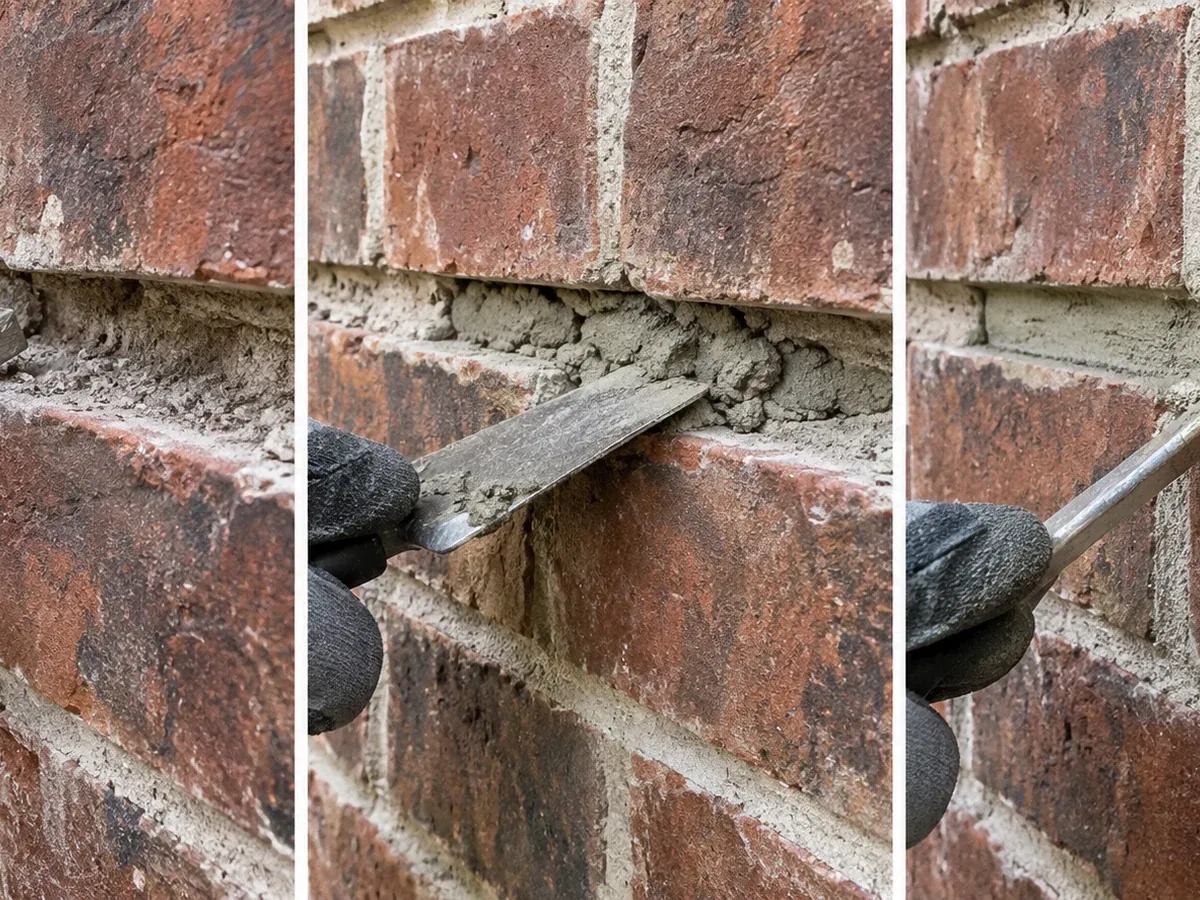
Durability depends on compatible materials, enough preparation and the details that manage movement and water. These are common questions—not remote diagnoses.
01
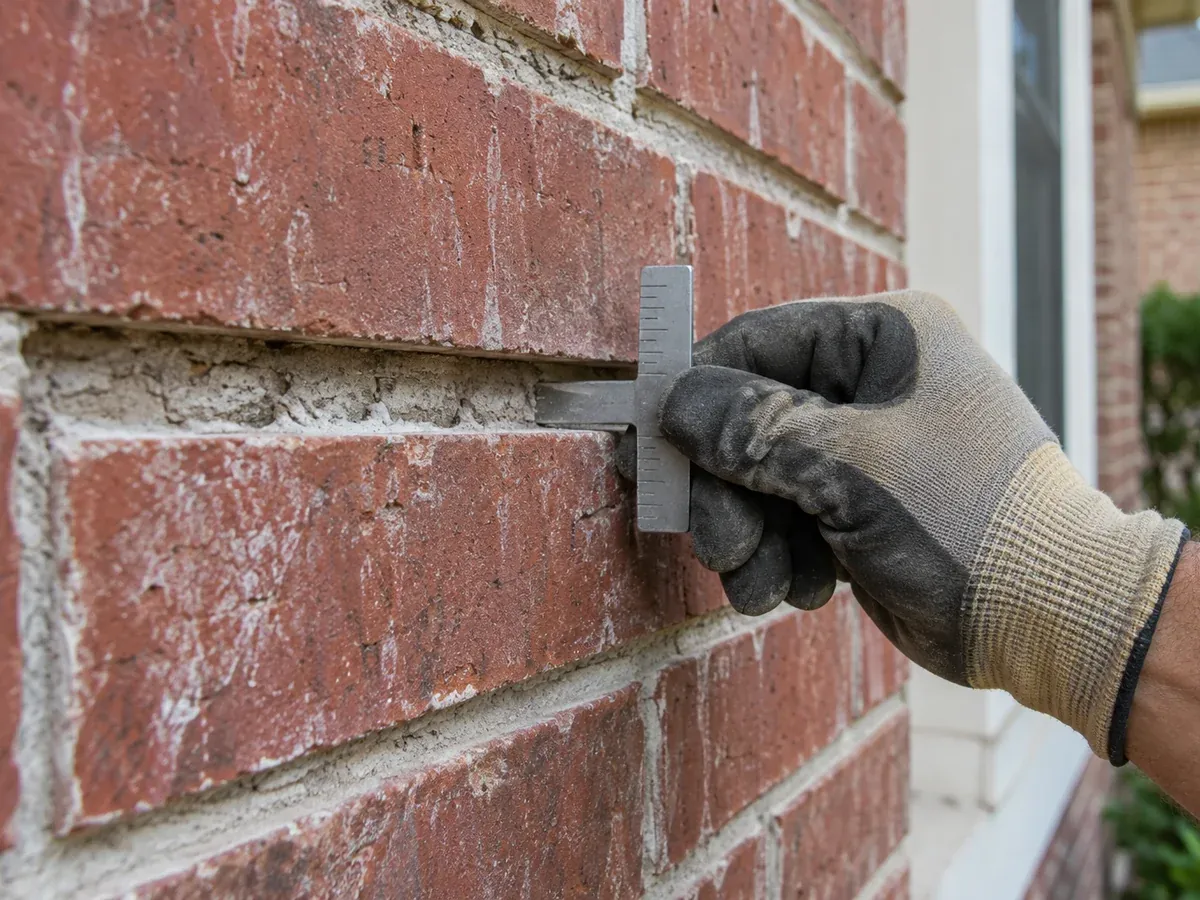
Wrong mortar
Strength, vapor behavior, sand and joint profile all affect compatibility.
02
Shallow joint removal
New mortar needs a sound, properly prepared joint—not a thin surface smear.
03
Unmanaged water
Flashing, caps, weeps, sprinklers and sealant interfaces can change the repair outcome.

04
Ignored movement
Filling a crack does not stop continuing movement or correct a load-path issue.
05
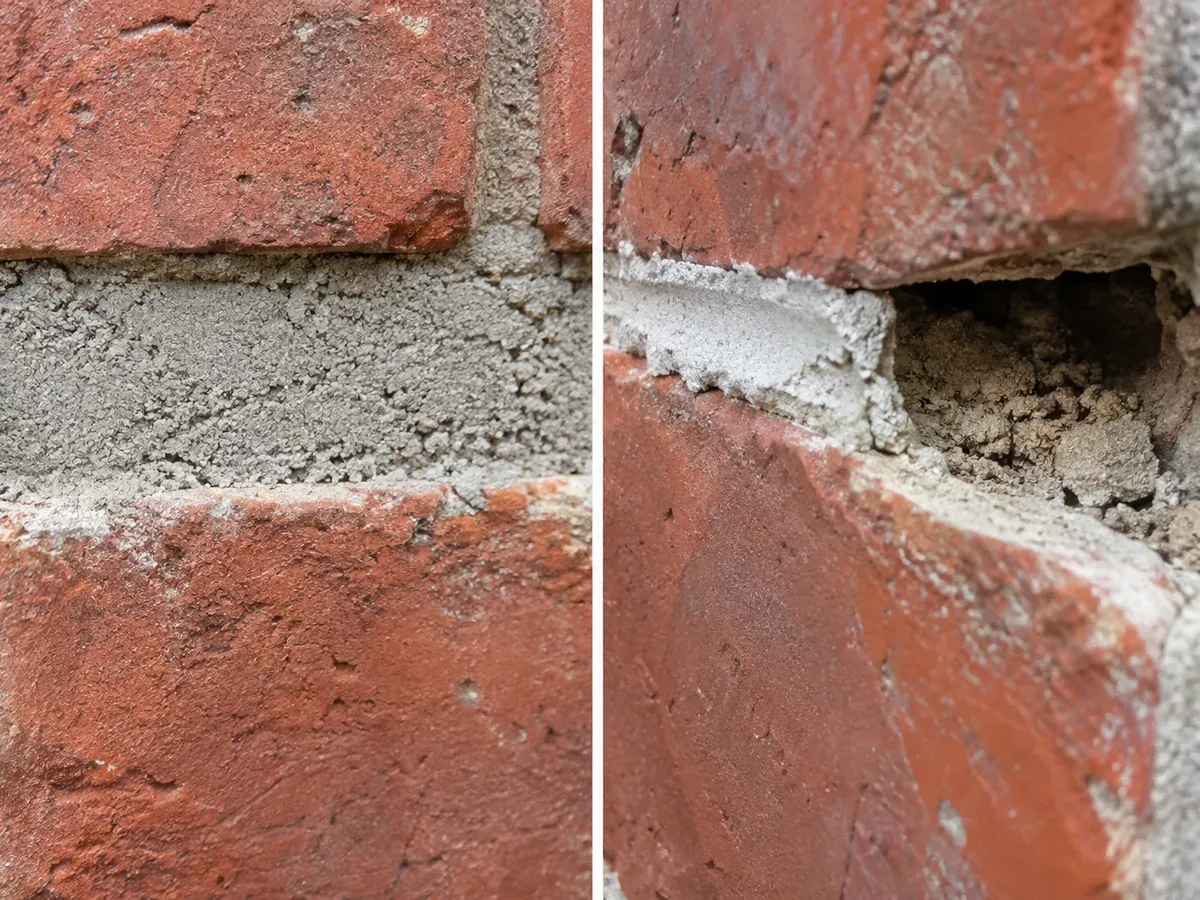
Poor material match
Brick size, texture, absorption, color range and weathering need more than a quick color pick.
06
Missing cure & cleanup
Installation conditions, tooling, protection and cleanup influence the final joint.
Homeowner resources
Understand the wall before choosing the fix.
Plain-language guides will help you document the condition, ask better questions and recognize when masonry work is only one part of the answer.
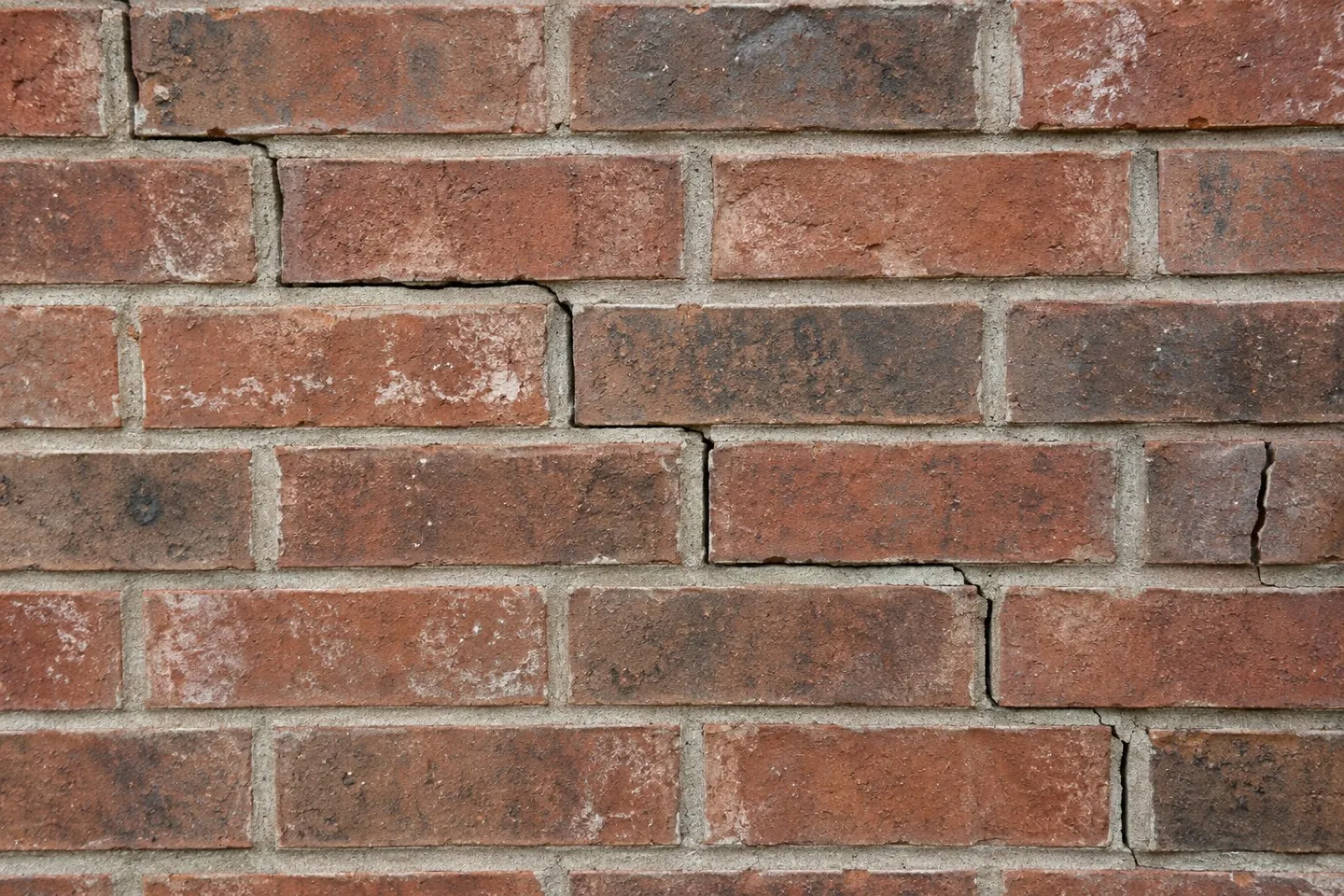
01 / FIELD GUIDE
Brick crack patterns and what they may mean
Direction, location, displacement and change over time.
Read the visual guide ↗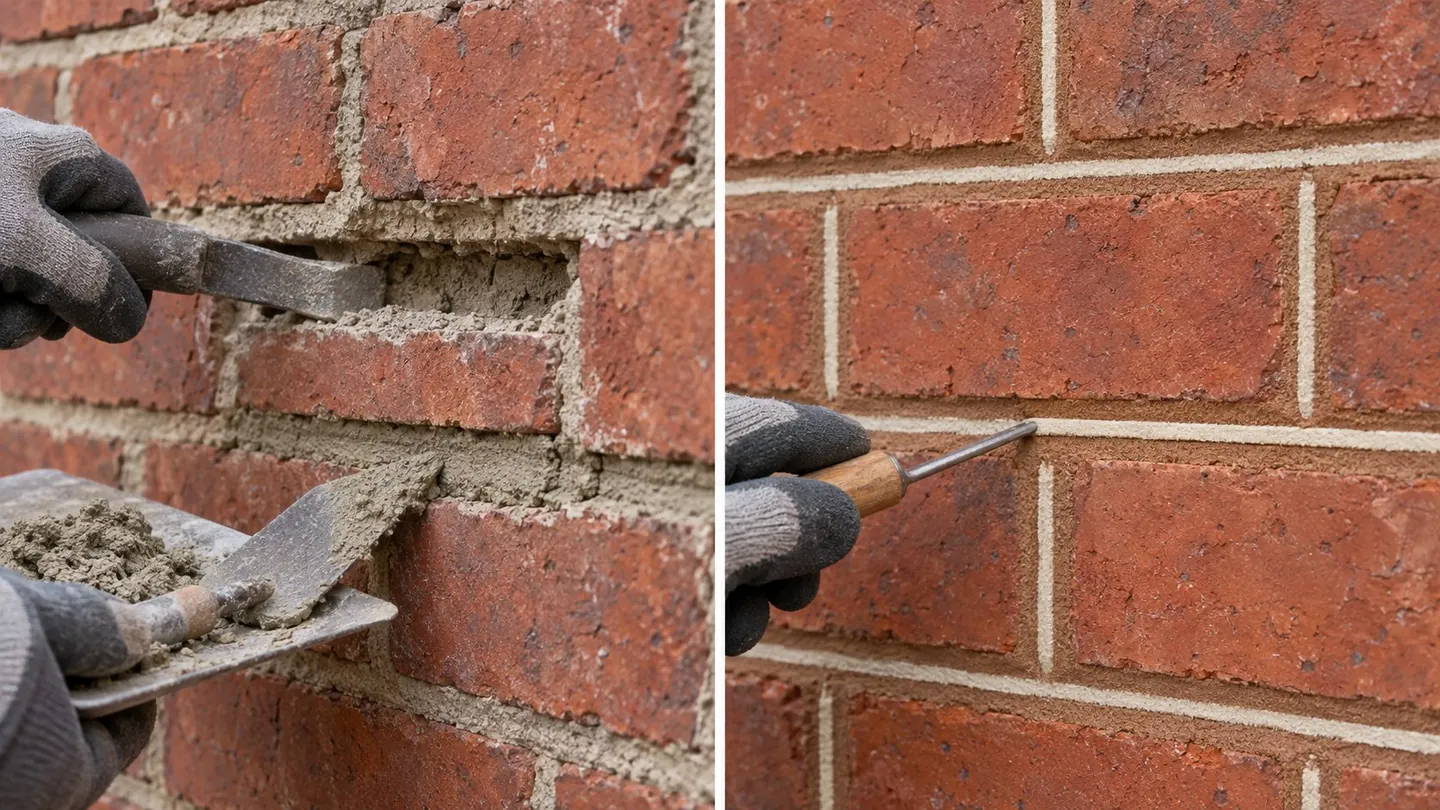
02 / MATERIALS
Repointing vs. tuckpointing
Terminology, removal depth, mortar selection and curing.
Read the complete guide ↗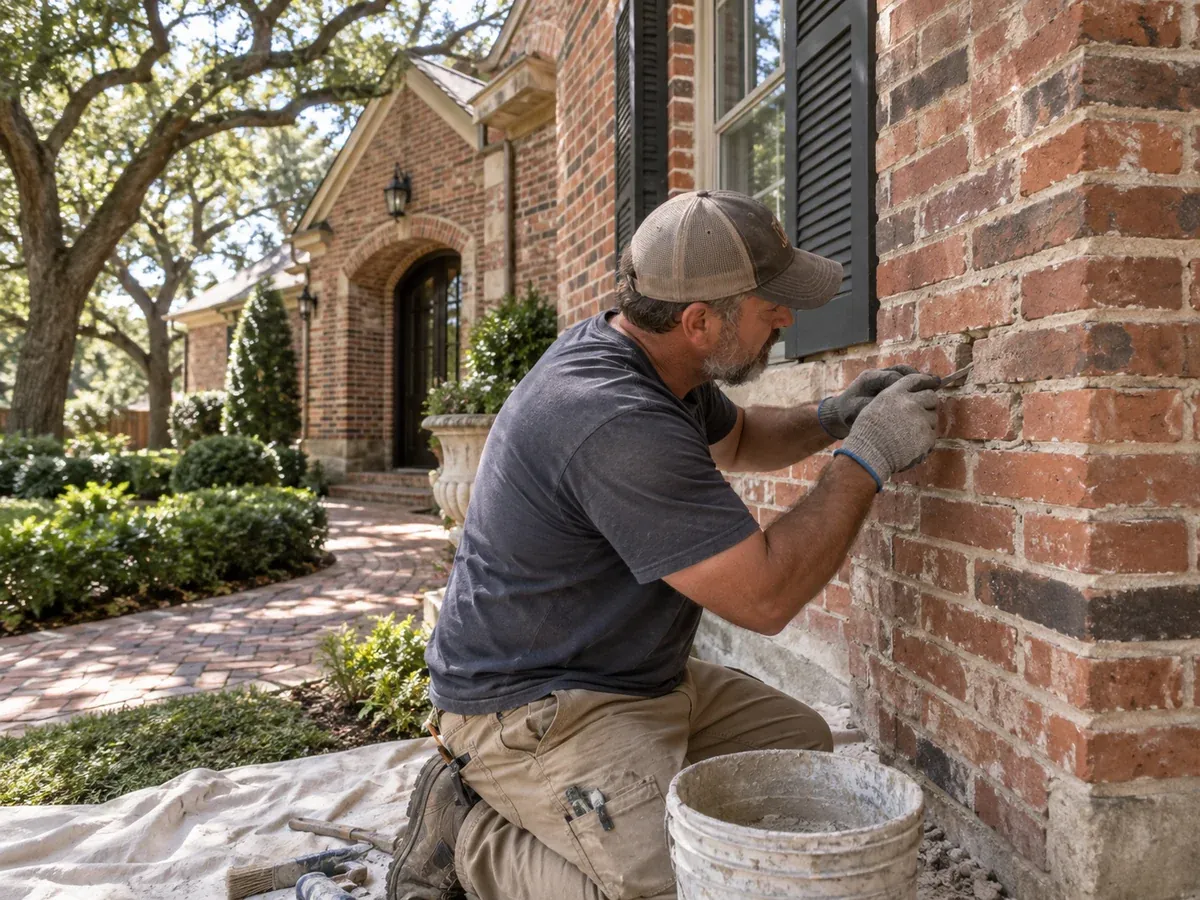
03 / WALL SYSTEMS
Brick veneer wall anatomy
What sits behind the face brick and why the layers matter.
Open the diagram ↗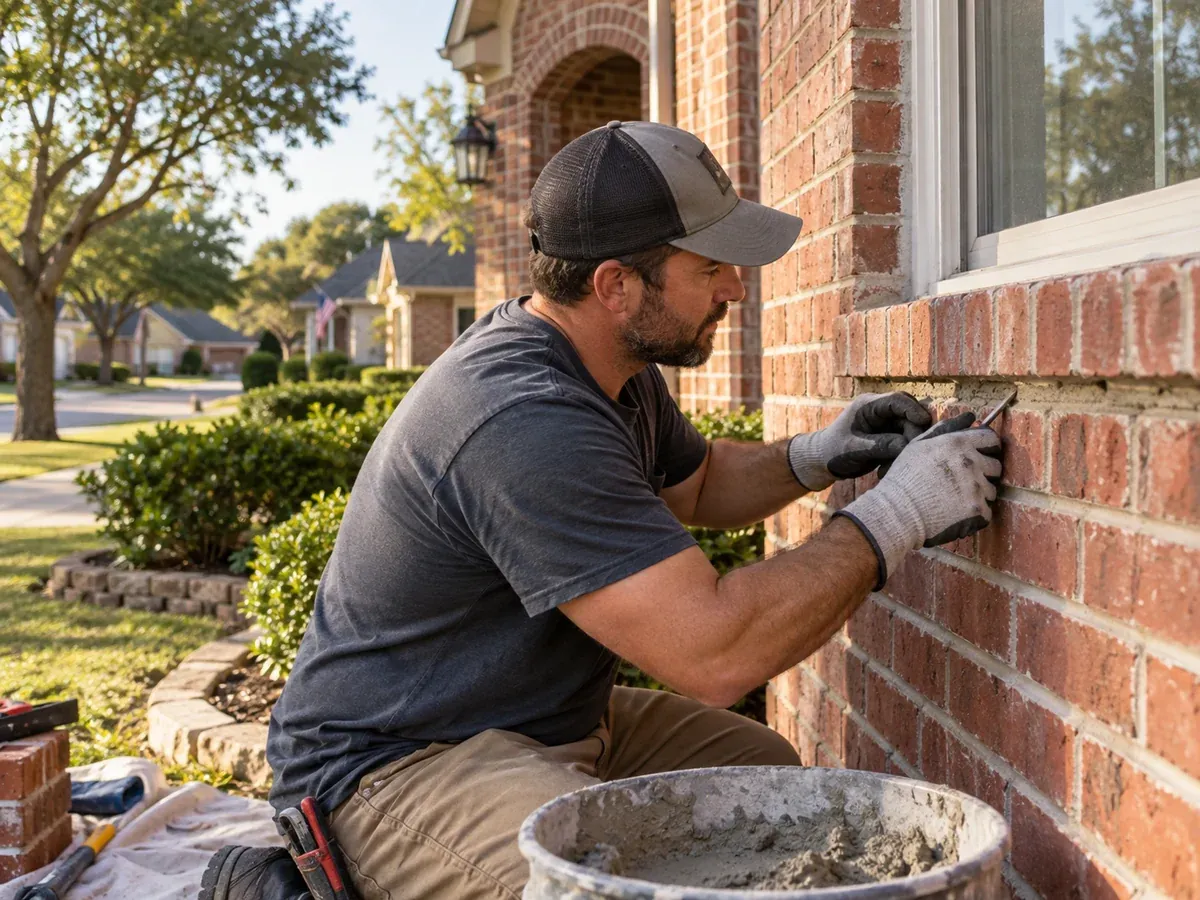
04 / ESTIMATING
How to photograph brick damage
Wide, mid and close shots without climbing or entering unsafe areas.
Read the photo guide ↗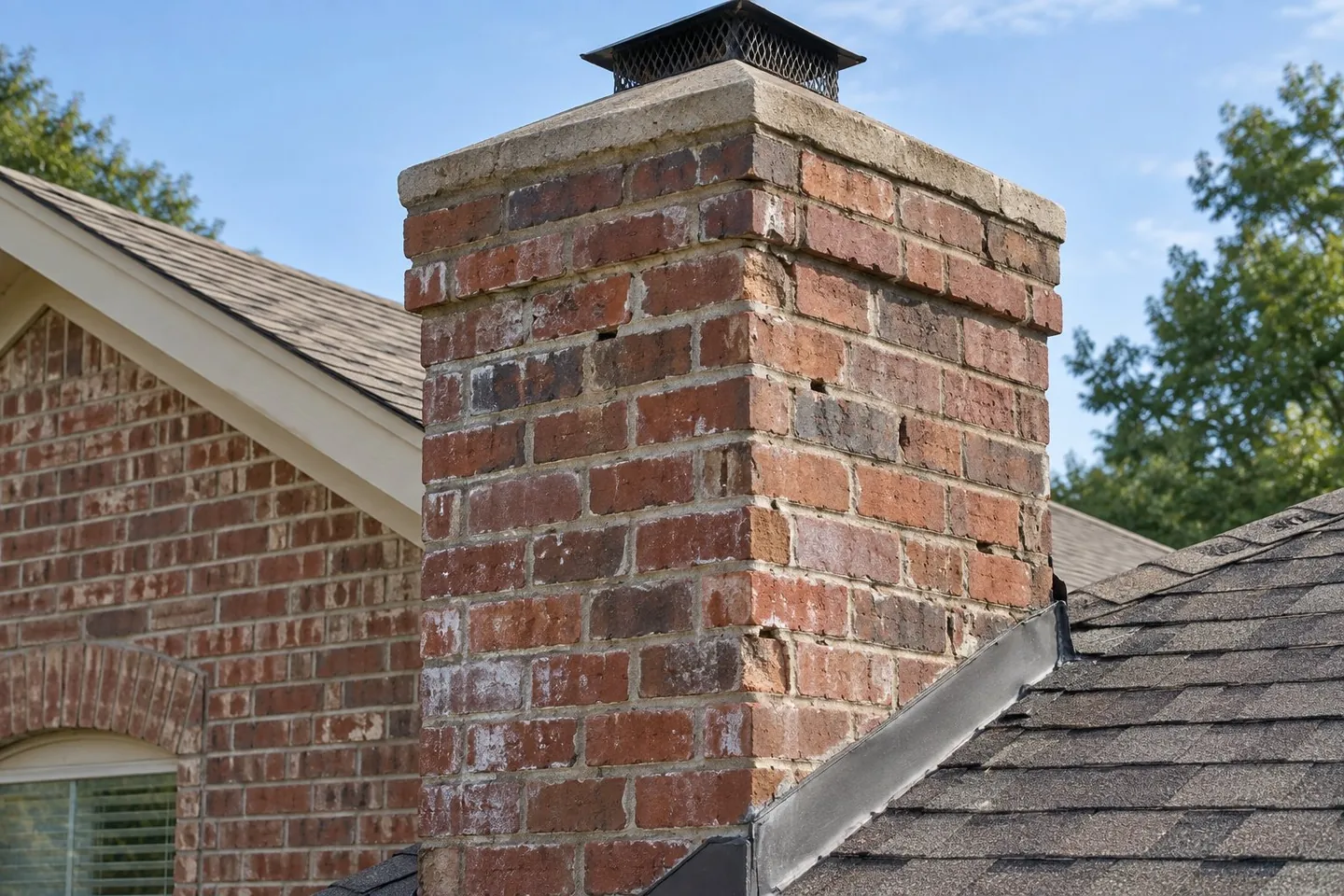
05 / MOISTURE
Why brick faces spall
Surface loss, moisture, salts and material compatibility.
Review visible symptoms ↗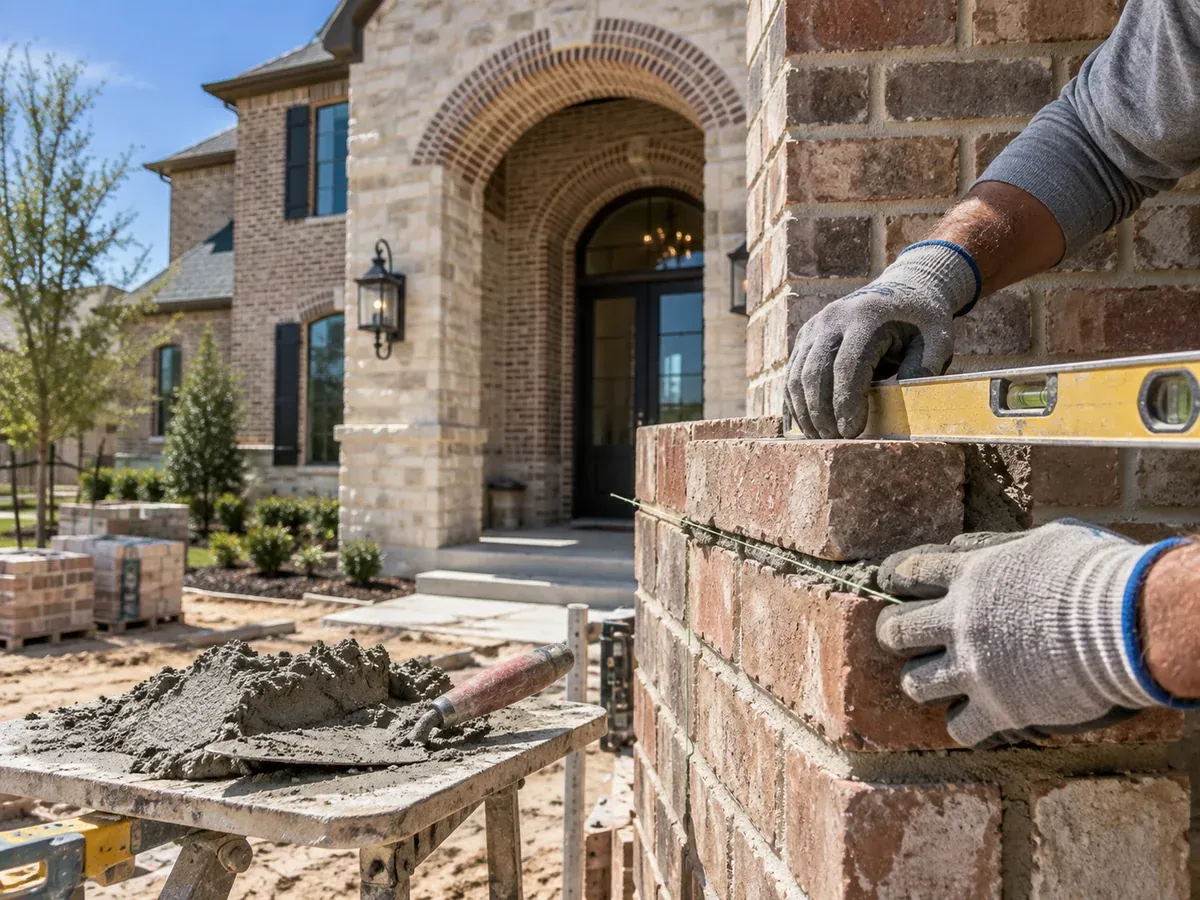
06 / DECISIONS
Repair or rebuild a masonry section?
Localized failure, widespread movement and practical scope factors.
See the decision path ↗Service area
Serving Dallas, Fort Worth and North Texas.
We accept masonry projects across both sides of DFW and throughout the connected North Texas region—generally within about 50 miles of Dallas or Fort Worth. Send your ZIP so we can confirm availability for the property and scope.
Dallas–Fort Worth / North TexasApproximate 50-mile coverage guide
Request an estimate
Show us what you want to build—or what changed.
Start with the essentials. Photos help us understand scale and location, but they do not replace an on-site inspection when the cause or safe scope is unclear.
Three useful photo distances
- 1Whole wall or feature
- 2Condition in context
- 3Close detail with scale
Prefer to talk?
Phone available by request
or Email us
Common questions
Before you choose a repair.
Good masonry decisions start by separating the visible symptom from the reason it developed.
Do you handle both new masonry and repairs?
Yes. The planned scope includes new bricklaying, walls, veneer, stone and custom masonry features, plus brick, mortar and masonry repair. The correct path depends on whether you are creating new work, restoring a stable section or rebuilding something that no longer performs as intended.
Can you estimate masonry work from photos?
Photos can help start the scope and reveal location, scale and visible symptoms. Height, access, hidden wall layers, active movement or moisture may still require an on-site review before a reliable scope can be defined.
Should every brick crack be filled?
No. A crack should be considered in context: direction, width, displacement, location and whether it is changing. Filling the surface alone does not correct continuing movement.
What is the difference between repointing and tuckpointing?
Repointing replaces deteriorated mortar in masonry joints. Tuckpointing is historically a decorative technique using contrasting fine lines, though the term is often used informally for mortar-joint repair.
Can new brick be matched to an existing wall?
A close match considers dimensions, texture, color range, age and weathering—not only one face color. Mortar sand, color and joint profile also affect how the repair reads across the wall.
When might a structural engineer be needed?
Rapid change, meaningful displacement, bulging, instability, falling masonry or symptoms across several building systems may call for an engineer or another qualified specialist. A final diagnosis should not be made from one photo.
Do you cover my North Texas city?
The launch plan covers 25 connected Dallas–Fort Worth and North Texas communities. Send your city or ZIP so the service route and project scope can be reviewed without implying a separate office in every city.
What affects masonry repair cost?
Scope, access, height, material matching, demolition, the underlying cause and any permit or engineering needs all matter. A visible crack length alone is not enough to price the complete work responsibly.
Start with the project
Build it well. Repair it for the right reason.
Send a few details and useful photos for an initial review.