Visual field guide / Crack guide
Brick Crack Patterns and What They May Mean
Crack direction is a clue, not a diagnosis. Location, displacement, openings, wall type and change over time determine which cause should be investigated first.
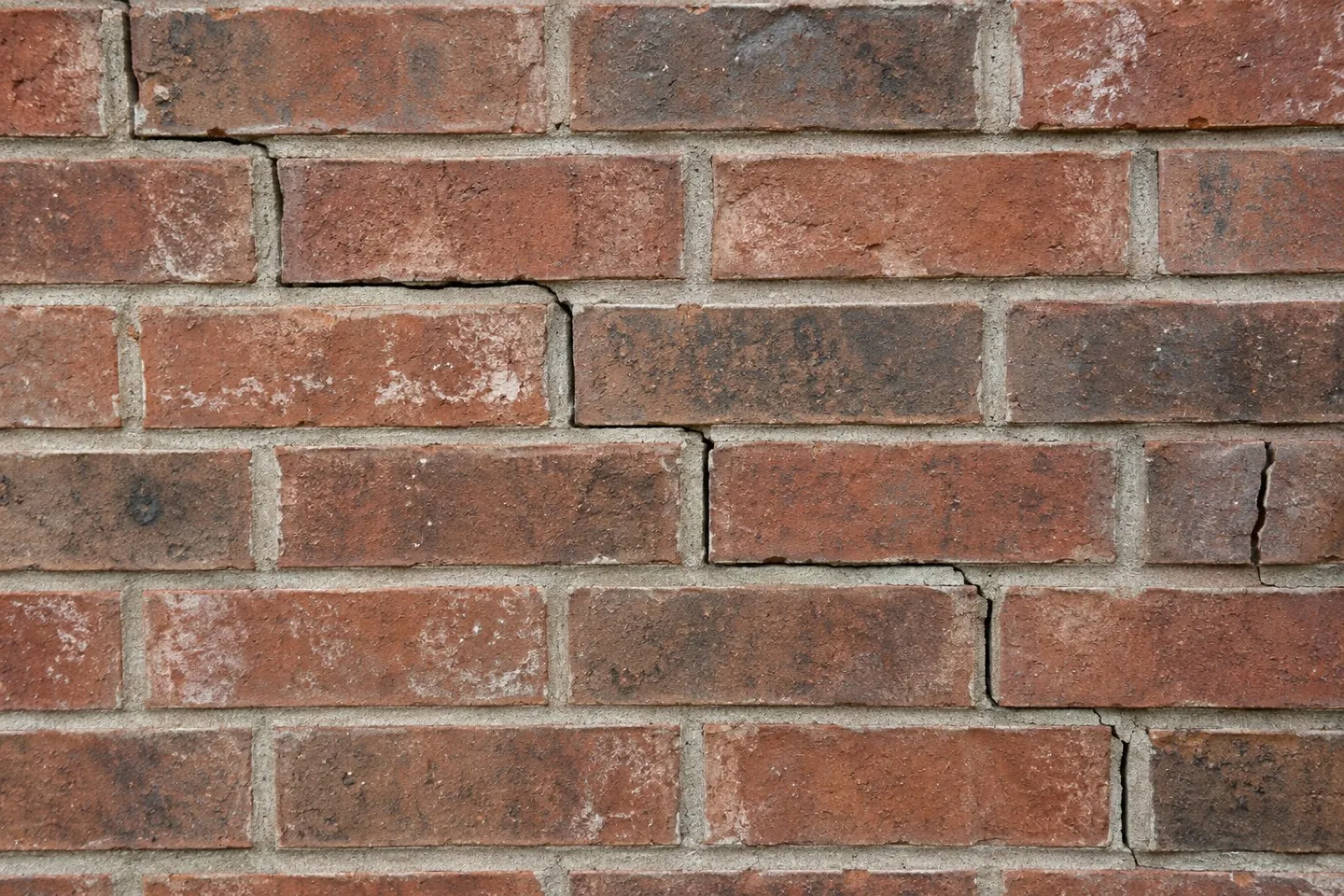
Direct answer
The short answer before the detail.
Crack direction is a clue, not a diagnosis. Location, displacement, openings, wall type and change over time determine which cause should be investigated first.
Read the complete pattern from start to finish and include nearby windows, doors, grade and roof edges.
The value of Brick Crack Patterns and What They May Mean is a clearer question, not an instant diagnosis. Ask which trade owns the next unanswered question when masonry, roofing, drainage, structure or a combustion system meet. This keeps a visual example educational instead of presenting it as proof about a customer property.
Treat Brick Crack Patterns and What They May Mean as a field-reading tool for the conversation with a contractor or specialist. Separate what the photograph confirms from ties, backing, flashing, corrosion or support that remains concealed. That makes the guide useful to a reader, a search engine and the person writing the eventual scope.
Layer by layer
Read the visible face as part of a system.
A good explanation of Brick Crack Patterns and What They May Mean should change what an owner asks before work begins. Keep whole-wall context beside every detail photo so location, scale and adjacent construction remain visible. The method remains grounded in the actual assembly rather than a generic product recommendation.
Visible evidence
Record the complete crack guide condition, its boundaries, scale and change over time before filling or covering it.
Assembly behind it
Identify backing, support, ties, openings, crowns, flashing or adjacent construction that can change the meaning of the face condition.
Water and movement
Trace likely entry, drainage, drying and movement paths instead of treating the most visible spot as the entire system.
Written repair boundary
State preparation, compatible material, finish, access, exclusions and the evidence that would require a different scope.
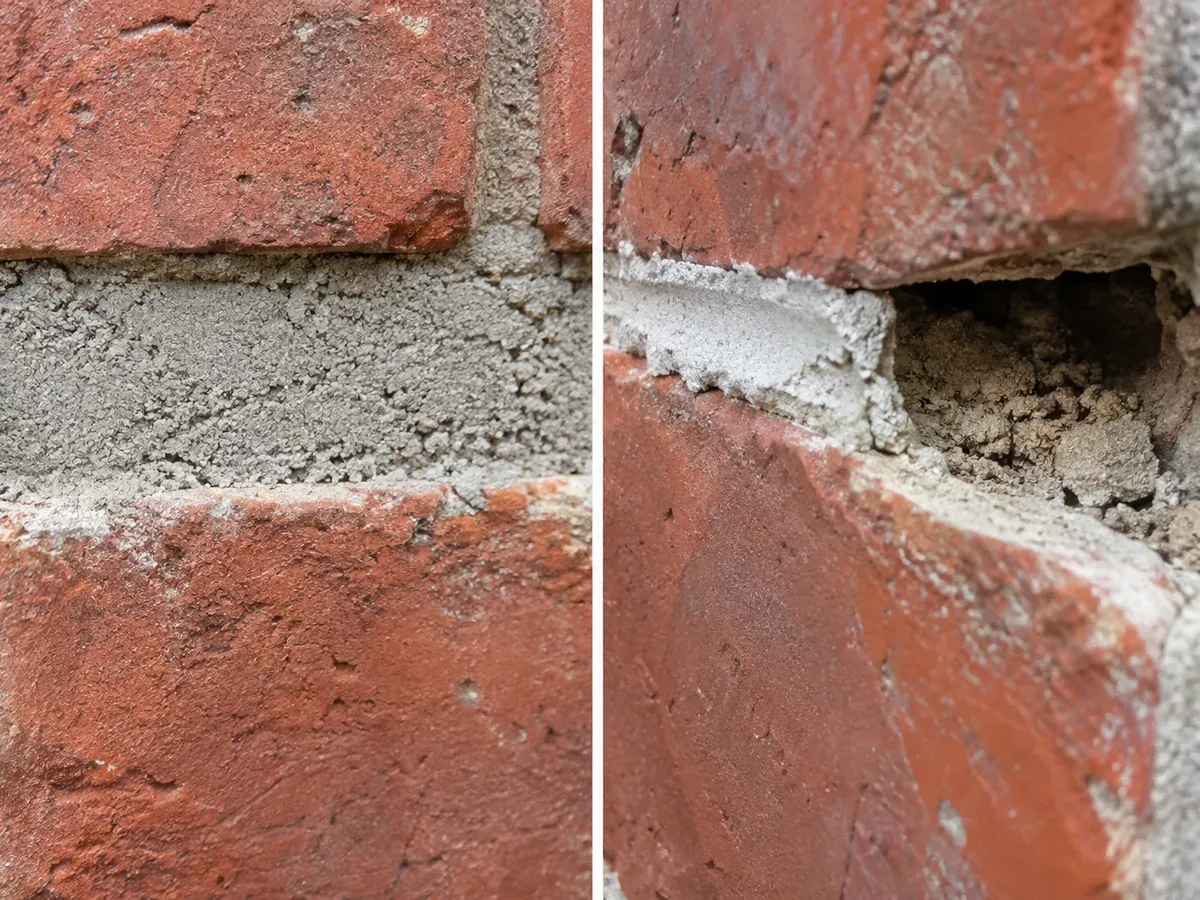
Correct vs. incomplete
A durable scope explains what happens before the new face appears.
Evidence, preparation, compatibility and sequence agree
Read Brick Crack Patterns and What They May Mean from the visible condition back toward support, water and movement. Require the proposed sequence to explain protection, removal, compatible replacement, curing and cleanup. The owner can then move from recognition to a responsible next step with fewer ambiguous labels.
The visible surface changes while the open question remains
Use Brick Crack Patterns and What They May Mean to distinguish terminology from an actual repair sequence. Use dated observations to distinguish a stable condition from one affected by weather, impact or continuing movement. The resulting answer is specific enough to act on without overstating what can be learned remotely.
What to look for
Four observations that make the first conversation useful.
Pattern and boundary
The central point in Brick Crack Patterns and What They May Mean is that similar appearances can require different methods. Write down material, boundary, preparation and exclusion questions before comparing price. That distinction is the difference between helpful preparation and unsupported online diagnosis.
Context around openings
This crack guide guide connects a common search phrase with the evidence a proposal should address. Compare the issue with cracks in brick walls, then follow the related brick repair page for fit, cost and process. A clear boundary also makes competing estimates easier to compare.
Moisture and exposure
The value of Brick Crack Patterns and What They May Mean is a clearer question, not an instant diagnosis. Ask which trade owns the next unanswered question when masonry, roofing, drainage, structure or a combustion system meet. This keeps a visual example educational instead of presenting it as proof about a customer property.
History and earlier work
Treat Brick Crack Patterns and What They May Mean as a field-reading tool for the conversation with a contractor or specialist. Separate what the photograph confirms from ties, backing, flashing, corrosion or support that remains concealed. That makes the guide useful to a reader, a search engine and the person writing the eventual scope.
Question → evidence → next step
Translate the guide into a repair decision.
Read the complete pattern from start to finish and include nearby windows, doors, grade and roof edges.
Topic-specific field notes
Connect this guide to the actual symptom and service scope.
A good explanation of Brick Crack Patterns and What They May Mean should change what an owner asks before work begins. Keep whole-wall context beside every detail photo so location, scale and adjacent construction remain visible. The method remains grounded in the actual assembly rather than a generic product recommendation.
Possible mechanisms behind cracks in brick walls
Material shrinkage or thermal movementOften appears at restraints, long runs or interfaces and may open and close seasonally.
Foundation or framing movementCan transfer a stepped, diagonal or vertical pattern into the veneer.
Corroding steel at an openingExpansion can lift or separate brick near lintels and shelf angles.
Water and freeze-related damageRepeated wetting can weaken mortar or brick and make existing cracks more visible.
Previous incomplete repairA rigid patch may crack beside the original line if the movement remains.
Checks that belong in brick repair
Define the boundaryTap, probe and compare the affected area with neighboring sound masonry before removal begins.
Protect the assemblyUse controlled removal so adjacent brick faces, flashing, ties and interior finishes are not damaged unnecessarily.
Match the replacementCompare dimensions, texture, absorption, color range and expected weathering rather than selecting by one dry sample.
Rebuild and cureSet units to the original bond, finish joints to the existing profile and protect fresh mortar while it cures.
Apply the guide to your property
Send the city, complete view and close detail.
A good explanation of Brick Crack Patterns and What They May Mean should change what an owner asks before work begins. Keep whole-wall context beside every detail photo so location, scale and adjacent construction remain visible. The method remains grounded in the actual assembly rather than a generic product recommendation.
- Fast, no-obligation estimate request
- Prompt response with a practical next step
- Clear assumptions, repair boundary and exclusions
Put it in writing
Questions for the estimate and scope.
Read Brick Crack Patterns and What They May Mean from the visible condition back toward support, water and movement. Require the proposed sequence to explain protection, removal, compatible replacement, curing and cleanup. The owner can then move from recognition to a responsible next step with fewer ambiguous labels.
Use Brick Crack Patterns and What They May Mean to distinguish terminology from an actual repair sequence. Use dated observations to distinguish a stable condition from one affected by weather, impact or continuing movement. The resulting answer is specific enough to act on without overstating what can be learned remotely.
- 01PurposeName the symptom and intended result.
- 02BoundaryDefine what is removed and retained.
- 03MaterialDocument compatibility and appearance.
- 04LimitationsList hidden work and other specialists.
Keep exploring
Related service and visible condition
Focused brick removal, matching and rebuilding after the likely cause of damage is considered.
Open page ↗ProblemCracks in Brick WallsCrack direction, width, displacement and change over time help determine the next question.
Open page ↗Compare symptomLoose or Broken BricksLoose units and impact damage need a stable repair boundary and a compatible replacement.
Open page ↗Keep exploring
Continue with these masonry guides
Visible conditions that justify structural review before cosmetic repair.
Open page ↗Wall systemsBrick Veneer Wall AnatomyA realistic layer-by-layer explanation of support, drainage, ties and openings.
Open page ↗SafetyDIY Brick & Mortar Repair LimitsWhere small maintenance ends and diagnostic, access or structural risk begins.
Open page ↗Keep exploring
Local service-area pages
Local masonry context and official permit information for Celina, Texas.
Open page ↗Tarrant CountyBrick Crack Patterns and What They May Mean questions in KellerLocal masonry context and official permit information for Keller, Texas.
Open page ↗Dallas / Kaufman CountyBrick Crack Patterns and What They May Mean questions in MesquiteLocal masonry context and official permit information for Mesquite, Texas.
Open page ↗Tarrant / Johnson / Ellis CountyBrick Crack Patterns and What They May Mean questions in MansfieldLocal masonry context and official permit information for Mansfield, Texas.
Open page ↗Tarrant CountyBrick Crack Patterns and What They May Mean questions in EulessLocal masonry context and official permit information for Euless, Texas.
Open page ↗Technical references
Sources and limits.
Guidance, codes and accepted methods can change. Verify the actual material, address and project scope. This page is educational and does not make a remote diagnosis.
Reviewed 2026-09-10.