Confirm the system and likely driver
Compare movement, moisture, support, openings, previous repair and the sound boundary. Escalate structural, roofing or safety questions when they are outside masonry scope.
Visible masonry symptom
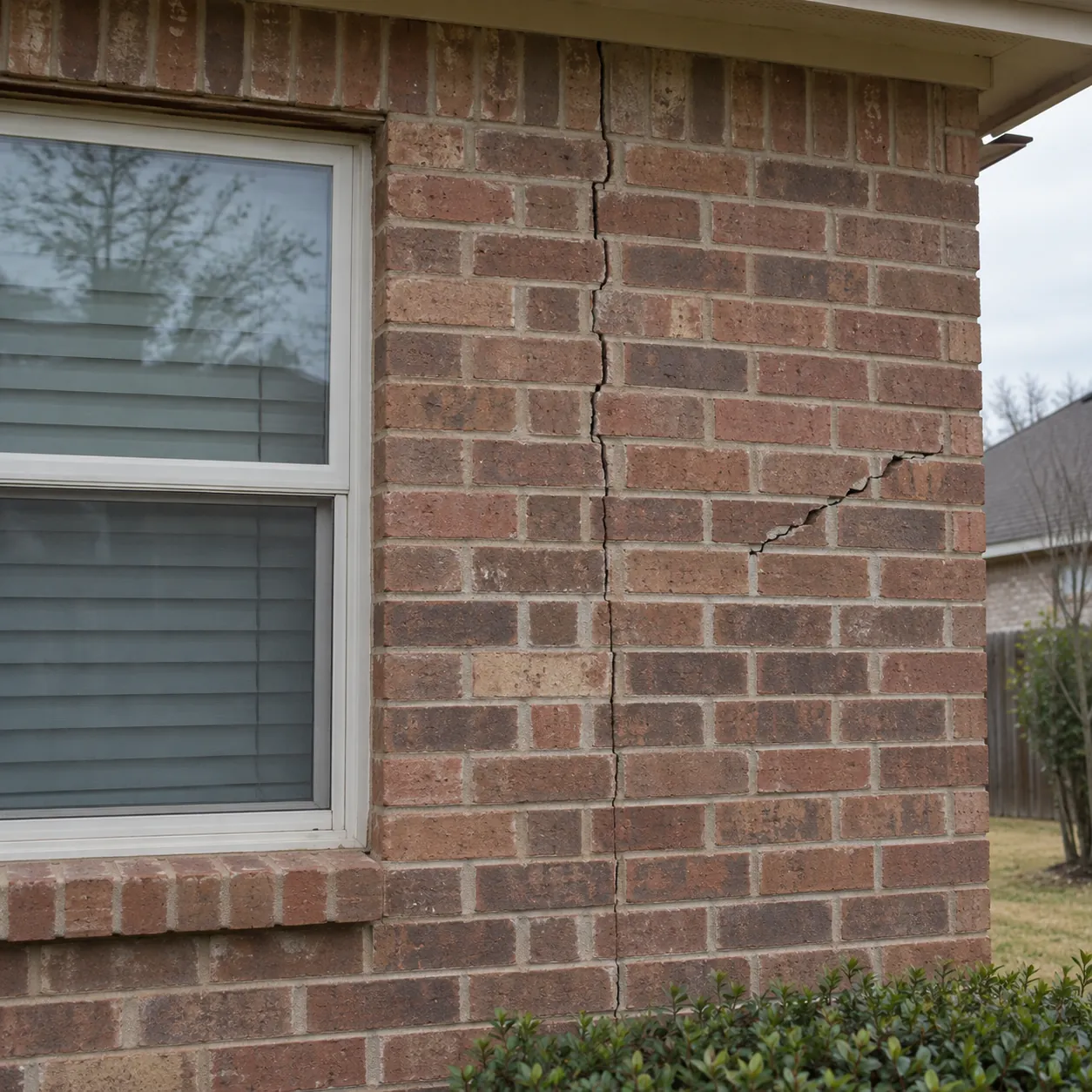
A brick-wall crack is a pattern to document, not a diagnosis by itself. Direction, width, displacement, location and change over time determine the next question.
Quick answer
A brick-wall crack is a pattern to document, not a diagnosis by itself. Direction, width, displacement, location and change over time determine the next question.
Crack direction, width, displacement and change over time help determine the next question. Several causes can create a similar face pattern, which is why the first job is to preserve evidence and separate urgent safety questions from the eventual repair method.
Photographs can establish location, extent and visible movement. They cannot confirm concealed ties, corrosion, framing, flashing or soil behavior. When those details control the decision, an on-site review or a qualified specialist must come before cosmetic work.
Before → evaluate → repair
This is an educational decision path, not a claimed customer before-and-after project.
Compare movement, moisture, support, openings, previous repair and the sound boundary. Escalate structural, roofing or safety questions when they are outside masonry scope.
Focused brick removal, matching and rebuilding after the likely cause of damage is considered. The scope should explain preparation, compatible materials, exclusions and what would require a change.
Correct vs. incomplete
Filling every crack immediately can hide whether it is changing and may bond areas that need to move independently.
The responsible direction is to decide whether the condition is stable, what system is involved and which repair endpoint is supported by the evidence. A clean appearance is a result; it is not the diagnostic method.
See the related Brick Repair service ↗Possible causes
These are investigation paths, not a remote conclusion about the property.
Often appears at restraints, long runs or interfaces and may open and close seasonally.
Can transfer a stepped, diagonal or vertical pattern into the veneer.
Expansion can lift or separate brick near lintels and shelf angles.
Repeated wetting can weaken mortar or brick and make existing cracks more visible.
A rigid patch may crack beside the original line if the movement remains.
How to document it
Do not climb, pull on loose work or remove material merely to obtain a photo.
Photograph the complete elevation, not only the widest point.
Use a ruler beside the crack and note face displacement; do not climb unstable areas.
Repeat the same view after significant weather or at planned intervals.
Show windows, doors, roof edges, corners, grade and nearby movement joints.
Problem → question → next step
Request a condition review
Include the city or ZIP, when the condition was first noticed and whether it changed after rain, heat, a freeze, impact or nearby construction. That helps separate a masonry repair inquiry from a structural, roofing or safety question.
Urgency
Keep people and vehicles away from loose units, pronounced bulges, leaning freestanding walls and damaged masonry above doors or walks. Do not stabilize elevated work with improvised bracing. Rapid change, significant displacement, an uncertain load path or widespread distress can justify structural review before masonry repair.
Other specialists
A roofer may need to correct flashing; a chimney professional may need to inspect liner or draft; an engineer may need to evaluate support or movement; a municipality or historic-review office may control the approved scope. The masonry proposal should say where its responsibility begins and ends.
Keep exploring
Keep exploring
A stepped crack follows mortar joints and may reflect movement, support or opening-related stress.
Open page ↗ProblemCracks Above Garage Doors & WindowsCracks over openings can involve steel lintels, arches, bearing, corrosion or movement.
Open page ↗ProblemBowing or Separating Brick VeneerOut-of-plane movement can involve ties, support, corrosion, moisture or structural movement.
Open page ↗Keep exploring
Keep exploring
Local service, related symptoms and official permit information for DeSoto, Texas.
Open page ↗Dallas / Ellis CountyCracks in Brick Walls questions in Cedar HillLocal service, related symptoms and official permit information for Cedar Hill, Texas.
Open page ↗Collin / Denton CountyCracks in Brick Walls questions in ProsperLocal service, related symptoms and official permit information for Prosper, Texas.
Open page ↗Dallas / Denton / Collin CountyCracks in Brick Walls questions in CarrolltonLocal service, related symptoms and official permit information for Carrollton, Texas.
Open page ↗Tarrant CountyCracks in Brick Walls questions in North Richland HillsLocal service, related symptoms and official permit information for North Richland Hills, Texas.
Open page ↗Common questions
No. Thermal movement, openings, corrosion, localized support and previous repairs can create different crack patterns.
Width alone is not a universal threshold. Displacement, rate of change, location and the wall system matter.
Dated photos and non-damaging measurements are useful. Avoid a patch that removes the baseline before review.
Keep clear of loose, falling, rapidly moving or significantly bulged masonry and request prompt on-site evaluation.
Start with the project
Send a few details and useful photos for an initial review.