Confirm the system and likely driver
Compare movement, moisture, support, openings, previous repair and the sound boundary. Escalate structural, roofing or safety questions when they are outside masonry scope.
Visible masonry symptom
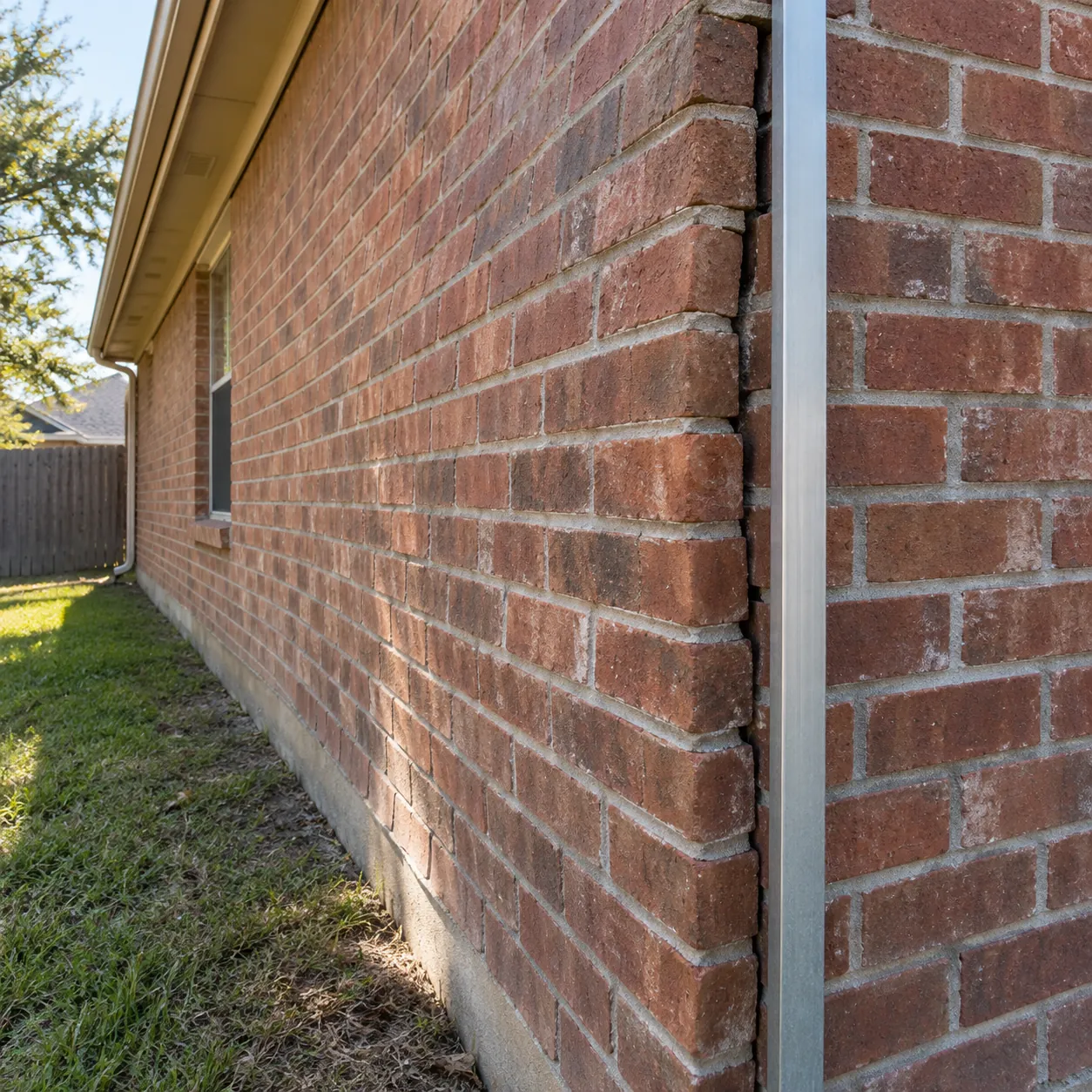
Bowing or separating brick veneer is out-of-plane movement. Possible causes include tie failure, support movement, corrosion, moisture or restrained expansion; keep clear of unstable areas and inspect the assembly.
Quick answer
Bowing or separating brick veneer is out-of-plane movement. Possible causes include tie failure, support movement, corrosion, moisture or restrained expansion; keep clear of unstable areas and inspect the assembly.
Out-of-plane movement can involve ties, support, corrosion, moisture or structural movement. Several causes can create a similar face pattern, which is why the first job is to preserve evidence and separate urgent safety questions from the eventual repair method.
Photographs can establish location, extent and visible movement. They cannot confirm concealed ties, corrosion, framing, flashing or soil behavior. When those details control the decision, an on-site review or a qualified specialist must come before cosmetic work.
Before → evaluate → repair
This is an educational decision path, not a claimed customer before-and-after project.
Compare movement, moisture, support, openings, previous repair and the sound boundary. Escalate structural, roofing or safety questions when they are outside masonry scope.
Exterior brick walls and veneer features scoped with the supporting assembly and water path in mind. The scope should explain preparation, compatible materials, exclusions and what would require a change.
Correct vs. incomplete
Anchoring or pushing the face without identifying the backing, ties and support can transfer load unpredictably.
The responsible direction is to decide whether the condition is stable, what system is involved and which repair endpoint is supported by the evidence. A clean appearance is a result; it is not the diagnostic method.
See the related Brick Walls & Brick Veneer service ↗Possible causes
These are investigation paths, not a remote conclusion about the property.
The veneer can lose restraint to the backing wall.
Settlement, rotation or deflection at the base can push the face out of plane.
Water can affect sheathing, framing or attachment behind the brick.
Long masonry runs without movement accommodation can build pressure.
Mortar bridges can connect materials that need to drain or move separately.
How to document it
Do not climb, pull on loose work or remove material merely to obtain a photo.
An oblique photograph makes changes in plane easier to see.
Photograph a long straight edge only where it can be placed without touching unstable work.
Record nearby cracks, sealant compression, loose units and roof or grade interfaces.
Force can release masonry or conceal the original geometry.
Problem → question → next step
Request a condition review
Include the city or ZIP, when the condition was first noticed and whether it changed after rain, heat, a freeze, impact or nearby construction. That helps separate a masonry repair inquiry from a structural, roofing or safety question.
Urgency
Keep people and vehicles away from loose units, pronounced bulges, leaning freestanding walls and damaged masonry above doors or walks. Do not stabilize elevated work with improvised bracing. Rapid change, significant displacement, an uncertain load path or widespread distress can justify structural review before masonry repair.
Other specialists
A roofer may need to correct flashing; a chimney professional may need to inspect liner or draft; an engineer may need to evaluate support or movement; a municipality or historic-review office may control the approved scope. The masonry proposal should say where its responsibility begins and ends.
Keep exploring
Keep exploring
Crack direction, width, displacement and change over time help determine the next question.
Open page ↗ProblemStair-Step Brick CracksA stepped crack follows mortar joints and may reflect movement, support or opening-related stress.
Open page ↗ProblemLoose or Broken BricksLoose units and impact damage need a stable repair boundary and a compatible replacement.
Open page ↗Keep exploring
A realistic layer-by-layer explanation of support, drainage, ties and openings.
Open page ↗Decision guideWhen Brick Cracks May Need an EngineerVisible conditions that justify structural review before cosmetic repair.
Open page ↗Decision guideRepair or Rebuild a Brick Wall?How failure area, support, displacement and matching affect the repair boundary.
Open page ↗Keep exploring
Local service, related symptoms and official permit information for Bedford, Texas.
Open page ↗Ellis CountyBowing or Separating Brick Veneer questions in MidlothianLocal service, related symptoms and official permit information for Midlothian, Texas.
Open page ↗Dallas / Collin CountyBowing or Separating Brick Veneer questions in RichardsonLocal service, related symptoms and official permit information for Richardson, Texas.
Open page ↗Dallas / Rockwall CountyBowing or Separating Brick Veneer questions in RowlettLocal service, related symptoms and official permit information for Rowlett, Texas.
Open page ↗Johnson / Tarrant CountyBowing or Separating Brick Veneer questions in BurlesonLocal service, related symptoms and official permit information for Burleson, Texas.
Open page ↗Common questions
Loose or significantly displaced masonry can fall. Keep people clear and request prompt on-site evaluation.
No. Tie systems have specific uses and need sound backing, suitable geometry and a confirmed cause.
The repair boundary depends on tie condition, support, displacement and access; some areas are localized and others are not.
Photos can show the shape of movement but usually cannot confirm concealed tie condition.
Start with the project
Send a few details and useful photos for an initial review.