Confirm the system and likely driver
Compare movement, moisture, support, openings, previous repair and the sound boundary. Escalate structural, roofing or safety questions when they are outside masonry scope.
Visible masonry symptom
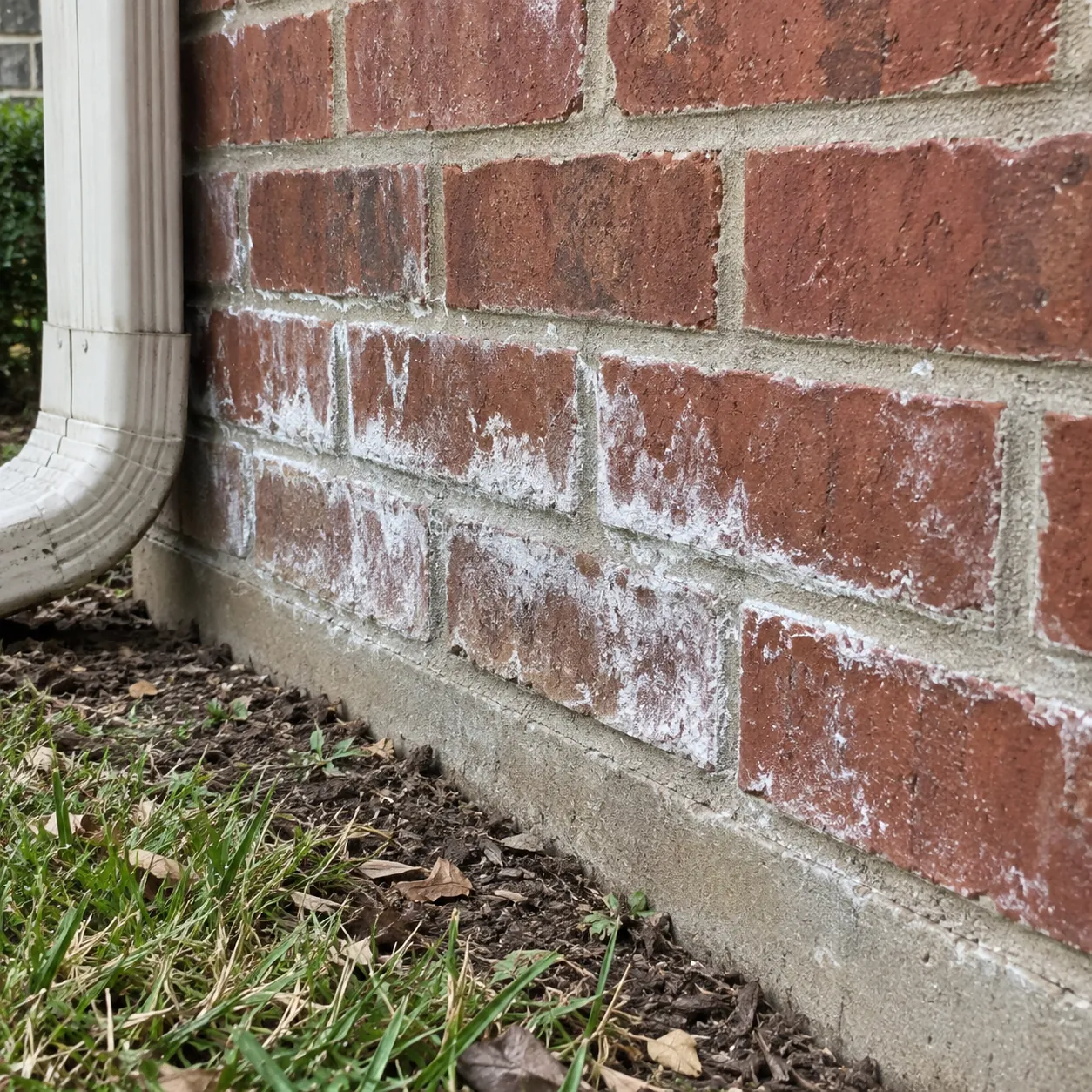
Efflorescence is a mineral deposit left when moisture moves through masonry and evaporates. Cleaning the white powder does not identify or stop the water route.
Quick answer
Efflorescence is a mineral deposit left when moisture moves through masonry and evaporates. Cleaning the white powder does not identify or stop the water route.
White deposits indicate moisture transported soluble salts through masonry; the water path matters. Several causes can create a similar face pattern, which is why the first job is to preserve evidence and separate urgent safety questions from the eventual repair method.
Photographs can establish location, extent and visible movement. They cannot confirm concealed ties, corrosion, framing, flashing or soil behavior. When those details control the decision, an on-site review or a qualified specialist must come before cosmetic work.
Before → evaluate → repair
This is an educational decision path, not a claimed customer before-and-after project.
Compare movement, moisture, support, openings, previous repair and the sound boundary. Escalate structural, roofing or safety questions when they are outside masonry scope.
Existing brick and stone assemblies restored with a practical repair boundary and compatible materials. The scope should explain preparation, compatible materials, exclusions and what would require a change.
Correct vs. incomplete
Painting, sealing or acid-cleaning before the water route is understood can trap moisture, stain the wall or damage mortar.
The responsible direction is to decide whether the condition is stable, what system is involved and which repair endpoint is supported by the evidence. A clean appearance is a result; it is not the diagnostic method.
See the related Masonry Repair & Restoration service ↗Possible causes
These are investigation paths, not a remote conclusion about the property.
Water can travel behind the face before exiting at joints or brick.
Lower-wall wetting can align with soil, mulch, sprinklers and downspouts.
Weeps and flashing may not be functioning as intended.
Horizontal surfaces can feed water into walls and freestanding features.
New work can release salts temporarily, while recurring deposits suggest continuing wetting.
How to document it
Do not climb, pull on loose work or remove material merely to obtain a photo.
Show how high and wide the deposit extends.
Note whether it returns after rain, irrigation or seasonal change.
Include downspouts, roof intersections, sills, caps, grade and sealant joints.
A small dry brushing test reveals whether deposits are superficial without damaging the face.
Problem → question → next step
Request a condition review
Include the city or ZIP, when the condition was first noticed and whether it changed after rain, heat, a freeze, impact or nearby construction. That helps separate a masonry repair inquiry from a structural, roofing or safety question.
Urgency
Keep people and vehicles away from loose units, pronounced bulges, leaning freestanding walls and damaged masonry above doors or walks. Do not stabilize elevated work with improvised bracing. Rapid change, significant displacement, an uncertain load path or widespread distress can justify structural review before masonry repair.
Other specialists
A roofer may need to correct flashing; a chimney professional may need to inspect liner or draft; an engineer may need to evaluate support or movement; a municipality or historic-review office may control the approved scope. The masonry proposal should say where its responsibility begins and ends.
Keep exploring
A lost brick face is a symptom often connected to moisture, salts, freeze events or incompatible repair.
Open page ↗ProblemCrumbling Mortar JointsSoft, recessed or missing mortar can admit water and reduce the wall’s weather protection.
Open page ↗ProblemChimney Brick & Mortar DamageChimneys receive concentrated weather exposure at the crown, shoulders, joints and flashing.
Open page ↗Keep exploring
How moisture, salts, freeze events and dense coatings can affect brick faces.
Open page ↗Wall systemsBrick Veneer Wall AnatomyA realistic layer-by-layer explanation of support, drainage, ties and openings.
Open page ↗MaintenanceNorth Texas Brick Maintenance ChecklistA seasonal visual review for walls, openings, chimneys, drainage and sealant interfaces.
Open page ↗Keep exploring
Local service, related symptoms and official permit information for The Colony, Texas.
Open page ↗Denton / Dallas CountyEfflorescence & Water Intrusion questions in LewisvilleLocal service, related symptoms and official permit information for Lewisville, Texas.
Open page ↗Denton / Tarrant CountyEfflorescence & Water Intrusion questions in Flower MoundLocal service, related symptoms and official permit information for Flower Mound, Texas.
Open page ↗Denton CountyEfflorescence & Water Intrusion questions in Little ElmLocal service, related symptoms and official permit information for Little Elm, Texas.
Open page ↗Tarrant / Dallas CountyEfflorescence & Water Intrusion questions in GrapevineLocal service, related symptoms and official permit information for Grapevine, Texas.
Open page ↗Common questions
No. It is generally a crystalline mineral deposit, although a wet area can also support biological growth that should be evaluated separately.
Often the dry deposit can be brushed gently, but recurrence means the moisture route still matters.
Only after the assembly and source are understood. A treatment must not block intended drying or drainage.
Sill, flashing, sealant and wall-cavity paths can concentrate water below openings.
Start with the project
Send a few details and useful photos for an initial review.